
Currently Empty: RM0.00

0 Comments
Surprising fact: about 60% of chronic wounds contain stubborn biofilms, compared with only 6% of acute samples — a gap that explains why many injuries refuse to close.
This review article introduces how beneficial microbes may complement standard care by restoring microbial balance, reducing inflammation, and supporting tissue repair. It highlights real-world challenges seen in Malaysian clinics where antibiotic resistance and microbiome disruption slow recovery.
Topical options can compete with pathogens, break down biofilms, and produce antimicrobial substances locally. Oral forms can tune immunity and nutrient status to aid overall repair.
The section sets expectations: readers will see mechanisms, strain-specific results such as L. plantarum, and outcomes by wound type — diabetic foot ulcers, burns, and chronic leg ulcers. It also stresses that these approaches are adjuncts to careful debridement, moisture balance, and infection control.
For product guidance or questions, contact Wellness Concept on WhatsApp at +60162116625 during business hours: Monday–Friday 9:30 am–6:30 pm; Saturday 10 am–5 pm; Sunday Closed.
Key Takeaways
- Biofilms drive chronic inflammation and delay closure in many long-standing wounds.
- Topical and oral beneficial microbes act by different, complementary mechanisms.
- Certain strains have shown faster repair and fewer complications in trials.
- These options are adjuncts, not replacements, to standard wound bed care.
- Clinician oversight is essential because benefits are strain- and wound-type specific.
- Practical guidance for Malaysia is available via Wellness Concept on WhatsApp.
Research Review Scope and User Intent in Malaysia
This section explains which studies and analyses shaped the article and why Malaysian clinicians and carers should read it.
Who this review targets
- Patients, caregivers, pharmacists, nurses, podiatrists, GPs, and wound specialists in Malaysia.
- Readers seeking non-antibiotic options, biofilm control, and microbiome-preserving strategies.
Questions answered
- Who may benefit and which strains and formulations were examined in study and clinical trials.
- How outcomes differ by wound type (diabetic foot ulcers, venous leg ulcers, pressure ulcers, burns).
- Which endpoints matter beyond time-to-closure: infection rates, antibiotic use, graft take, scar quality, and recurrence.
The review integrates in vitro, animal, and human studies and contrasts oral versus topical routes. It also discusses how antibiotics can disrupt skin microbiota and promote biofilm tolerance, arguing that adjunctive strategies deserve critical analysis.
| Study type | Primary endpoint | Typical days to effect |
|---|---|---|
| In vitro | Biofilm reduction | 1–7 |
| Animal | Tissue repair markers | 7–21 |
| Human clinical | Time-to-closure & infection rates | 14–90 |
Where gaps exist, the article flags limitations and bias. Malaysian readers needing product or protocol guidance may contact Wellness Concept via WhatsApp at +60162116625 during business hours: Mon–Fri 9:30 am–6:30 pm; Sat 10 am–5 pm; Sun Closed.
Understanding the Wound Healing Process
Skin repair proceeds as a tightly timed sequence of steps that restore barrier function and tissue integrity.
Phases of repair
Hemostasis begins with platelet activation and clot formation. Platelets release growth factors that recruit immune cells and fibroblasts to the injury.
Inflammation clears debris and microbes. Neutrophils arrive first, then macrophages which shift from pro‑inflammatory M1 to reparative M2 phenotypes to signal progression.
Proliferation and remodelling
During proliferation, fibroblasts deposit extracellular matrix and form granulation tissue. Angiogenesis supplies oxygen and nutrients while keratinocytes re-epithelialize across the bed.
Remodelling follows as collagen type I replaces early matrix and tensile strength improves. Controlled deposition determines final scar architecture and function.
Key players and modifiers
Fibroblasts, immune cells, growth factors, and the local microbiome coordinate this process. Comorbidities such as diabetes, venous insufficiency, neuropathy, and poor nutrition can stall phases and create chronic states.
Understanding these stages clarifies why interventions that support fibroblast activity, resolve inflammation, and guide collagen remodelling can improve outcomes.
Skin Microbiome Disruption in Acute and Chronic Wounds
Injury reshapes the skin’s microbial map within hours, often tilting balance away from helpful residents toward opportunistic colonisers. This shift reduces commensals and creates a nutrient‑rich niche where environmental and thermotolerant bacteria multiply.
How injuries reshape microbial communities
Burns and penetrating trauma expose deeper tissue and donor sites to outside microbes. In these settings, skin wound profiles change markedly and may predict later complications.
Clinical implications for burns, diabetic foot ulcers, and leg ulcers
- Burn patient data link microbiome shifts to higher risk of infection and sepsis, making early stewardship vital.
- Chronic diabetic foot ulcers often hide low‑grade infections; MDR organisms increase amputation and mortality risk in patients.
- Systemic antibiotics can induce dysbiosis and select for tolerant biofilm communities that slow healing.
Microbiome‑friendly strategies aim to control pathogens while preserving protective commensals. The section previews how targeted adjuncts may rebalance communities, reduce pathogen dominance, and set up the deeper discussion on biofilms that follows in this article.
Biofilms as Barriers to Repair
Biofilms form dense, glue-like communities that block immune cells and therapies from reaching microbes. These structured groups embed bacteria in an extracellular matrix that limits penetration and masks antigens.
Persistence, quorum sensing, and chronic inflammation
The matrix shields pathogens and sustains low-grade inflammation seen in many chronic wounds. Quorum sensing lets cells coordinate virulence and persistence, so the community acts as one defended unit.
Why antibiotics often fail against polymicrobial films
Standard antibiotics target planktonic cells. Biofilm residents tolerate drugs and can rebound after subtherapeutic exposure, driving repeated infection and delayed wound healing.
- Prevalence: About 60% of chronic wounds harbour biofilms versus 6% of acute wounds.
- Resilience: Polymicrobial composition boosts collective tolerance and odor, pain, and stalled closure.
- Adjuncts: Thorough debridement, moisture control, and agents with antibiofilm action improve dressing performance and topical response.
Recent in vitro studies showed that probiotics wound culture supernatants reduced matrix thickness, suggesting postbiotic effects that may disrupt films. This analysis prepares readers for the next sections in the article that examine mechanisms and strain-specific outcomes in wound healing.
Probiotics for wound healing
Clinical and laboratory reports have shown selected beneficial microbes can speed tissue repair and lower infection in burns and diabetic ulcers.
Oral approaches act via systemic immune modulation and improved nutrient uptake. Topical products work locally by competing with pathogens and disrupting biofilms.
Reported effects include faster granulation, quicker re-epithelialization, higher collagen content, and increased angiogenesis in animal and human models.
“Some formulations achieved similar clinical outcomes to silver sulfadiazine in burn care while preserving beneficial skin microbes.”
Not all strains or formats perform equally. Efficacy depends on strain biology, product quality, and patient comorbidities. Safety and selection matter in clinical practice.
- Adjunct to standard debridement and moisture balance.
- Cell-free postbiotic extracts may offer antibiofilm and immunomodulatory actions.
- May reduce reliance on broad-spectrum antibiotics when used carefully.
| Setting | Observed benefit | Evidence level |
|---|---|---|
| Burn care | Comparable infection control to silver | Clinical trials |
| Diabetic ulcers | Faster granulation & collagen | Animal + human studies |
| Topical use | Biofilm disruption | In vitro + clinical reports |
Practical note: Choose evidence-linked strains and pair them with meticulous bed prep and dressing protocols. Clinicians should assess patient risks and product viability before use.
Mechanisms: How Probiotics May Support Tissue Repair
Readers will learn the biological pathways that let certain microbes suppress pathogens, calm inflammation, and support new tissue growth.
Pathogen competition and antimicrobial peptides
Beneficial strains occupy niches and use nutrients, a process called competitive exclusion, which lowers pathogen load and limits biofilm establishment.
They also stimulate host production of antimicrobial peptides (AMPs) and secrete factors that interfere with quorum sensing, reducing microbial coordination and virulence.
Immunomodulation and inflammation resolution
Microbial signals modulate the immune response by shifting cytokine profiles and encouraging macrophage polarization toward repair‑supportive phenotypes.
This tempering of inflammation helps lesions transition from the inflammatory phase into active proliferation.
Angiogenesis, matrix remodelling, and contraction
Some strains increase angiogenesis, improving oxygen and nutrient delivery essential to granulation and epithelial migration.
They also influence collagen deposition and remodelling, promoting balanced matrix formation that aids contraction and reduces excessive scarring.
Notably, these mechanisms are strain‑specific; efficacy and immune effects vary, so clinical choice should match the lesion type and patient risks.
Oral Versus Topical Probiotics: What Studies Show
Trials have weighed systemic immune modulation against local pathogen competition to clarify their roles in tissue repair. This section compares the treatment pathways and practical use cases relevant to Malaysian patients and clinics.
Systemic immune and nutrient effects
Oral administration can improve micronutrient absorption, regulate immune responses, and reduce chronic inflammation. These systemic effects may indirectly aid wound healing by improving host resilience.
Clinical studies reported benefits in episiotomy, oral mucosal ulcers, diabetic foot ulcers, and burn care. In such patients, faster closure and fewer complications were noted as adjunctive treatment signals.
Direct topical actions on biofilms and local microbiota
Topical products deliver high local concentrations that compete with pathogens and break down biofilm matrix. In vitro work showed that cell-free supernatants reduced biofilm thickness, indicating useful postbiotic effect.
- Use case: oral routes suit systemic comorbidity management; topical routes target infected, biofilm-prone wounds.
- Formulations: gels and dressing-embedded products have matched silver sulfadiazine in some burn studies.
- Safety: viability control and contamination risk differ by route; topical sterility is critical.
Practical note: Both approaches work best as adjuncts to debridement, moisture balance, offloading/compression, and glycemic control. Strain selection and dosing remain important gaps that future study must address.
Strain-Specific Evidence Highlight
Several targeted strains have shown distinct clinical and lab benefits when matched to specific lesion types. This section summarises key findings and practical implications for Malaysian clinics.
Lactoplantibacillus plantarum in burns and chronic wounds
lactobacillus plantarum reduced infection and sped closure in burn care and chronic leg ulcers in clinical and preclinical reports. Animal work noted lower type I collagen deposition, which aligned with less fibrosis and improved scar outcomes.
Lactocaseibacillus casei and Limosilactobacillus reuteri findings
casei has been linked to immune modulation that favours pro-repair macrophage profiles and enhanced angiogenesis. In vitro work shows lactobacillus acidophilus and casei inhibit MRSA, suggesting a possible adjunct role against difficult pathogens.
L. reuteri extracts accelerated oral mucosal healing by activating PI3K/Akt and β-catenin/TGF-β1 pathways in vivo, pointing to molecular routes that support cell migration and matrix remodelling.
Bifidobacterium species and adjunctive benefits
Bifidobacterium species offer systemic immune and metabolic benefits that can indirectly support cutaneous repair. Clinicians should match strain properties—AMP production, quorum-sensing interference, and immunomodulation—to the clinical problem.
- Evidence note: outcomes are strain- and wound-type dependent.
- Formulation matters: viability, delivery method, and contact time influence success.
- Next: clinical outcomes by wound type are explored in the following section.
Clinical Outcomes by Wound Type
Clinical outcomes vary widely by lesion type, patient comorbidity, and the dominant microbial flora.
Diabetic foot ulcers: infection, healing rates, and amputation risk
Diabetic foot ulcers with MDR pathogens had higher amputation and mortality in several reports.
When used alongside debridement and glycemic control, select adjuncts showed improved healing metrics and reduced infection burden in a clinical study.
Venous leg ulcers and pressure ulcers: chronicity and biofilms
Leg ulcers and other chronic wounds often harbour biofilms (≈60%). Repeated debridement plus antibiofilm support helped restore progression in trials and clinic series.
Postbiotic extracts and living formulations may lower local inflammation and promote granulation and re-epithelialization.
Burn injuries: infection prevention and grafting considerations
In burn care, select gels and dressings matched silver sulfadiazine in infection control and time-to-closure in some studies.
Donor site microbiome shifts can affect graft take, so microbial stewardship around grafting improves outcomes.
| Wound type | Key benefit observed | Recommended adjuncts |
|---|---|---|
| Diabetic foot ulcers | Faster granulation, fewer infections | Debridement, offloading, tailored formulations |
| Leg ulcers / pressure ulcers | Biofilm reduction, better progression | Repeated debridement, compression, antibiofilm agents |
| Burn injury | Comparable infection control, improved graft take | Moist dressings, topical gels, perioperative stewardship |
Practical note: Match strain and delivery to lesion type, colonising flora, and patient risks. Monitor closely for deterioration or osteomyelitis and track infection rates, antibiotic use, time-to-closure, graft success, and scar outcomes.
Molecular Insights: Fibroblast Migration and Anti-fibrotic Pathways
Cbench experiments traced signals that increase fibroblast motility while reducing excess collagen production. The analysis used human dermal cell co-cultures with a tested microbial mixture (BioK) and multi-modal readouts.
PI3K/Akt signaling, paxillin, integrins, and cell motility
BioK upregulated PI3K pathway genes: Paxillin, PI3K, PKC, and ITG‑β1. These changes enhanced cytoskeletal remodelling and faster fibroblast migration, which supports timely tissue repair in the proliferative phase.
Downregulating Nox4, α-SMA, and type I collagen to limit scarring
The same treatment lowered Nox4, α‑SMA, and Col‑I via TGF/Smad modulation. Reduced myofibroblast differentiation implies less fibrosis and improved scar quality in later clinical observation.
The role of lactic acid and pH modulation in phenotype control
Lactic acid production lowered local pH and dampened pro‑fibrotic signaling. PI3K involvement was validated with LY294002; findings were confirmed by transcriptomics, RT‑qPCR, ELISA, and immunostaining across dose ranges (MOI).
Clinical link: These mechanisms suggest faster wound healing with reduced collagen scarring and highlight that active components may be live cells or metabolites. Such pathway-specific knowledge helps guide smarter strain selection and formulation strategies.
Formulations and Delivery Systems
How a product is made and packaged largely controls its shelf life, release profile, and clinical utility at the injury site.
Topical formats include impregnated dressings, hydrogels, and lotions that keep the bed moist while delivering active agents. Gels suit irregular surfaces; dressings provide sustained contact and controlled release. Some clinical reports showed topical gels matched silver sulfadiazine in burn treatment outcomes.
Dressings, gels, lotions, and postbiotic supernatants
Cell-free supernatants deliver antibiofilm molecules without live bacteria and reduce biofilm metrics in vitro. Lotions are useful peri‑wound, while hydrogels cushion and maintain moisture.
Encapsulation and viability considerations
Microencapsulation protects probiotic cells during production and storage. It supports stability, controlled release, and better adhesion on contact. Manufacturers must control titer, contaminants, and storage stability.
| Format | Typical use | Key advantage |
|---|---|---|
| Hydrogel | Irregular surfaces, burns | Conforms, moist environment, sustained release |
| Impregnated dressing | Sustained contact, chronic lesions | Longer dwell time, controlled release |
| Postbiotic extract | Biofilm-prone beds | Antibiofilm effects without live cells |
Practical note: Match format to exudate level and debridement schedule. Check non‑cytotoxic carriers and monitor tolerance while keeping standard infection control. Clinicians in Malaysia should consider production quality and documented study outcomes when choosing a product.
Comparators: Probiotics, Antibiotics, and Silver-Based Care
This section compares three common antimicrobial strategies and how each shapes recovery and microbial balance at the injury site.
Balancing antimicrobial efficacy with microbiome preservation
Antibiotics deliver targeted pathogen suppression but often harm beneficial commensals. That collateral damage can promote tolerance and encourage biofilm growth in chronic lesions, especially in diabetic foot ulcers where MDR organisms worsen outcomes.
Silver-based agents provide broad-spectrum control and remain a standard comparator in burn care. Prolonged use may impair host cells and reduce microbial diversity, so clinicians weigh short-term control against longer-term barrier function.
Microbial therapies and postbiotic extracts aim to disrupt biofilm matrix while preserving or restoring protective communities. In vitro work shows probiotic supernatants reduce biofilm thickness, suggesting a microbiome-preserving approach that may lower subsequent infection risk.
- Antibiotics can select resistance and alter commensals, affecting recurrence and treatment response.
- Silver works rapidly but can impact host tissue and resident microbes with repeated exposure.
- Microbial adjuncts seek to control pathogens and support community recovery, potentially reducing overall antibiotic use.
| Comparator | Primary effect | Clinical note |
|---|---|---|
| Antibiotics | Pathogen kill; systemic reach | Risk of dysbiosis and resistance |
| Silver-based | Broad local antimicrobial | Useful in burns; watch for cytotoxicity |
| Microbial/postbiotic | Biofilm disruption; microbiome support | Some studies show comparable infection control to silver in burns |
Choice of treatment must be individualized by wound type, bioburden, and comorbidity. Integrating culture-guided therapy and biofilm-aware debridement improves outcomes regardless of adjunct choice.
Research note: Head-to-head randomized studies with standard endpoints are needed to refine protocols and confirm long-term benefits for wound healing in Malaysian practice.
Safety, Contraindications, and Quality Considerations
Not every patient or lesion is a candidate for microbial adjuncts. Careful selection and oversight matter to avoid harm and to maximise benefit.
Key safety principles include verified strain identity, consistent CFU labelling, and contamination screening. Products should have clear batch records and expiry dates.
Clinical caution is needed in people with severe immunosuppression, active systemic infection, central lines, or signs of SIRS. In such cases, specialist review is essential before use.
- Monitor patients for local irritation, allergic reactions, or changes in exudate after topical application.
- Systemic administration should be reviewed if bacteremia risk exists or if invasive devices are present.
- Consider lactic acid effects on peri‑wound skin; protect the barrier when pH shifts occur.
- Maintain sterile technique with topical preparations to avoid exogenous contamination.
- Document baseline metrics and follow-up outcomes; report adverse events to build practice evidence.
Not all studies reported consistent benefit; effect depends on strain, lesion type, and product quality. This review article recommends using microbial approaches as adjuncts to debridement, moisture balance, offloading or compression, and infection control rather than as replacements.
Evidence Gaps and Research Directions
Despite promising reports, the literature shows wide variation in methods and endpoints that limit clear clinical recommendations. This article calls for structured work to translate molecular insight into usable clinical protocols in Malaysia and beyond.
Strain selection, dosing, and wound-specific protocols
High-quality randomized trials are needed that stratify by lesion type and baseline microbial burden. A clear systematic review framework and standard operating procedures will reduce heterogeneity.
Recommendations should include target CFU ranges for oral regimens, contact times for topical formats, and standardized reporting of viability. Future work must compare products head-to-head against silver and antibiotics with biofilm-aware debridement to define relative effect.
Endpoints beyond closure: scar quality and recurrence
Current studies focus on time-to-closure. A next-generation research agenda should add scar pliability, recurrence, pain, and quality of life as core outcomes.
- Validate molecular markers (PI3K/Akt, Nox4/α-SMA/Col‑I) as predictors of response.
- Assess postbiotics as scalable options where live-cell viability is limited.
- Run pragmatic trials in Malaysian care pathways to test feasibility, cost, and adherence.
Next step: coordinated systematic review and meta-analysis efforts will refine effect estimates and guide practice while targeting the key unanswered questions about the role of clinical microbial adjuncts in wound healing.
Practical Considerations for Malaysian Patients and Clinicians
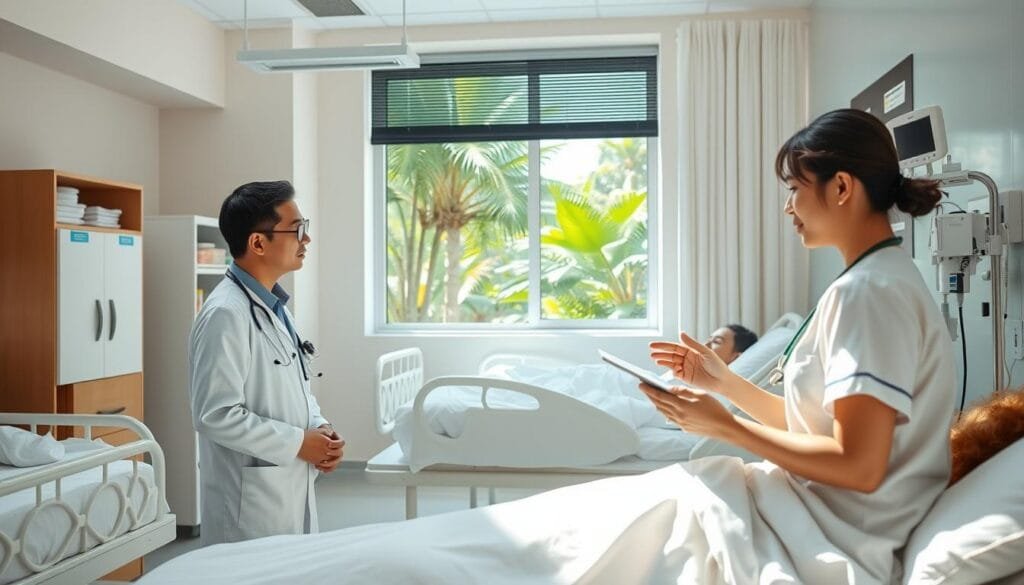
When a chronic lesion shows stalled progress or recurrent superficial infection, targeted microbial adjuncts may be considered as part of a stepwise plan. Clinicians should view these options as complements to standard care rather than replacements.
When to consider adjunct microbial approaches
Consider microbial adjuncts when debridement, dressings, and offloading have been applied but the lesion still fails to progress. Use them most often in biofilm-prone chronic ulcers such as diabetic foot and venous leg ulcers, or in selected burn care contexts.
Coordinating with standard care and infection control
Apply topical products immediately after debridement so active agents contact a clean surface. Pair topical use with compression for venous disease or offloading for plantar ulcers.
Monitor metrics weekly: size, depth, exudate, odor, and temperature. If deterioration occurs within 7 days, escalate care and review antimicrobial choices.
Practical checklist and local support
Key steps:
- Prioritise strains and formulations backed by evidence for the lesion type.
- Ensure product quality, batch records, and compatible dressings to avoid inactivation.
- Integrate glycemic control, nutrition, and edema management into the treatment plan.
| Action | Timing (days) | Notes |
|---|---|---|
| Baseline assessment | 0–1 days | Document size, depth, exudate, and photos |
| Apply topical adjunct | 0–2 days after debridement | Use evidence-linked product; avoid incompatible antiseptics |
| Weekly monitoring | 7 days | Track progress; escalate if no improvement after 2–3 checks |
| Review and document outcomes | 14–28 days | Adjust treatment and contribute data to local practice |
For Malaysian patients and clinics needing product advice and routines, contact Wellness Concept via WhatsApp at +60162116625.
Business hours: Monday–Friday 9:30 am–6:30 pm; Saturday 10 am–5 pm; Sunday Closed.
Conclusion
Summary: Targeted microbial adjuncts showed consistent signals of benefit when added to standard care. Evidence from in vitro, animal, and human studies suggested reduced biofilm burden, calmer inflammation, and improved fibroblast-driven tissue repair.
Clinical takeaways: These approaches can complement debridement, moisture balance, offloading, and glycaemic control to aid wound repair and improve scar quality. Postbiotic extracts offer a stable alternative where live-cell use is limited.
For Malaysia-based guidance and product selection, WhatsApp Wellness Concept at +60162116625. Business hours: Mon–Fri 9:30 am–6:30 pm; Sat 10 am–5 pm; Sun Closed.
FAQ
What evidence supports using beneficial bacteria to speed tissue repair?
Multiple laboratory and clinical studies show select strains can reduce pathogenic burden, lower inflammation, and stimulate cell migration and collagen deposition. Animal models and small human trials—especially with Lactoplantibacillus plantarum and Lactocaseibacillus casei—report faster closure and fewer infections. Larger randomized trials remain limited, so clinicians weigh current data alongside standard care.
Who should read this review and what practical questions does it answer in Malaysia?
This review targets clinicians, wound-care nurses, researchers, and patients in Malaysia interested in adjunctive microbial therapies. It answers whether topical or oral approaches add benefit, which strains show promise, safety concerns, and how these options might integrate with existing dressings and infection control practices.
How do normal repair phases relate to using bacterial therapies?
Skin repair moves through hemostasis, inflammation, proliferation, and remodeling. Beneficial microbes act mainly during inflammation and proliferation by lowering harmful microbes, modulating immune cells, and promoting fibroblast activity and angiogenesis—supporting a smoother transition through each phase.
How does injury change the skin microbial community?
Trauma breaks barrier defenses and allows opportunistic species to dominate, shifting diversity and function. Chronic wounds often show reduced beneficial commensals and persistent pathogens, which sustains inflammation and delays closure in burns, diabetic foot ulcers, and venous leg ulcers.
Why do biofilms block recovery and resist antibiotics?
Biofilms form dense, matrix-encased communities with altered metabolism and quorum-sensing signaling. This structure limits antibiotic penetration and shields microbes from immune attack, which explains recurrent infection and poor response to standard antimicrobials in many chronic lesions.
What mechanisms explain how live strains help tissue repair?
Beneficial strains compete with pathogens, secrete antimicrobials (AMPs), and produce metabolites like lactic acid that lower pH. They also modulate immune responses to reduce chronic inflammation, promote angiogenesis, and enhance collagen remodeling and wound contraction through signaling pathways that guide fibroblasts and keratinocytes.
Which is better: oral supplements or topical applications?
Both have roles. Oral use can boost systemic immunity and nutrient absorption, which may aid healing indirectly. Topical preparations act directly on local microbiota and biofilms, offering targeted antimicrobial and trophic effects. Choice depends on wound type, patient condition, and available evidence.
Which specific strains have the most supporting data?
Lactoplantibacillus plantarum has notable evidence in burn and chronic wound models. Lactocaseibacillus casei and Limosilactobacillus reuteri show promising antimicrobial and immunomodulatory effects. Bifidobacterium species may offer adjunctive systemic benefits. Strain identity and formulation matter more than genus alone.
Do outcomes differ by wound type (diabetic foot, venous leg ulcers, burns)?
Yes. Diabetic foot ulcers benefit most from approaches that reduce infection and improve tissue perfusion, while venous and pressure ulcers often require strategies that disrupt biofilms and address chronic inflammation. Burn care focuses on infection prevention and graft survival. Evidence strength varies by condition.
What molecular pathways are involved in improved cell migration and reduced scarring?
Beneficial microbes influence PI3K/Akt signaling, integrin and paxillin dynamics, and redox enzymes like Nox4. They can lower α-SMA and type I collagen expression in some contexts, promoting balanced remodeling and potentially reducing hypertrophic scarring while encouraging orderly cell motility.
What formulations deliver the best local effects?
Dressings, hydrogels, and gels that contain live strains or postbiotic supernatants perform well in preclinical work. Encapsulation techniques preserve viability and control release. Product stability, storage, and compatibility with existing dressings determine real-world utility.
How do these approaches compare with antibiotics and silver dressings?
Antimicrobials and silver offer strong immediate antimicrobial action but can disrupt commensal communities and delay beneficial recolonization. Beneficial strains aim to balance antimicrobial control with microbiome preservation. In practice, combined strategies—using targeted antimicrobials for acute infection and microbial therapies for restoration—are often considered.
Are there safety concerns or contraindications?
Most topical interventions show good tolerance, but risks include local irritation, rare infection in immunocompromised patients, and product contamination. Clinicians should use quality-assured strains, follow regulatory guidance, and avoid live applications in severely immunosuppressed individuals without specialist input.
What are the main gaps in current research?
Key needs include standardized strain selection, dosing studies, head-to-head trials versus standard care, long-term outcomes like scar quality and recurrence, and wound-specific protocols. Better reporting and larger randomized trials will clarify clinical value.
When should Malaysian patients and clinicians consider these approaches?
Consider adjunctive microbial therapies for nonhealing or recurrent chronic lesions after standard infection control and debridement. Decisions should be multidisciplinary and take local resources into account. For inquiries, contact Wellness Concept via WhatsApp at +60162116625 during business hours: Mon–Fri 9:30 am–6:30 pm; Sat 10 am–5 pm; Sun Closed.