
Currently Empty: RM0.00
0 Comments
Can a single device really make daily routines measurably better for people and clinics across Malaysia?
Wellness Concept presents a buyer-focused guide that cuts through claims and shows how to compare real performance. They highlight practical metrics such as concentration, tech type, and day-to-day ease.
Key features include a 10-Year Warranty, 1-Million Product Liability, 100% Chemical-Free operation, KFDA Approved parts, 99.99% Pure Platinum plates, a P.A.S.T. Cleaning System, and Anti-Bacterial Technology (ABT).
The guide frames hydrogen water as a wellness-oriented hydration choice and asks buyers to judge units by delivered results, not just marketing. It also previews ownership realities: filtration, maintenance, warranty, and service in Malaysian homes and clinics.
This short introduction sets expectations for clear testing, usable advice, and tips to verify claims like high ORP or ppb so readers can make a confident purchase.
Key Takeaways
- Wellness Concept offers a practical, buyer-focused guide for Malaysian users and professionals.
- Compare delivered performance—concentration, tech, and daily usability—rather than marketing terms.
- Major product strengths include long warranty, liability cover, platinum plates, and ABT cleaning tech.
- Understand ownership needs: filtration, upkeep, and local service before buying.
- The guide explains how to verify common claims like ORP and ppb with real checks.
Why hydrogen-rich water matters in functional medicine today
Practical buyers want clarity on how dissolved molecular gas in a cup may help with oxidative balance and everyday wellness.
Molecular hydrogen and oxidative stress support
Molecular hydrogen is studied as a supportive agent that can help rebalance oxidative stress—a simple term for when cells face too many reactive molecules.
Antioxidant properties and what current scientific evidence suggests
Peer-reviewed research shows growing interest but not universal claims of cures. Evidence supports modest antioxidant properties at the cellular level, while stressing realistic expectations.
Buyers should focus on measurable delivery — reliable dissolved concentration matters more than marketing statements.
Hydration, cellular-level focus, and wellness positioning in Malaysia
Integrating regular intake into daily hydration routines matters most; consistency beats occasional high readings.
In Malaysia, wellness trends pair clinician guidance with practical tools. Readers should balance claims about specific diseases with quality evidence and local health advice.
- See hydrogen as supportive, not a one‑size cure.
- Prioritize devices that deliver verified dissolved levels.
- Make intake a regular habit tied to broader lifestyle choices.
Hydrogen water generator for functional medicine: what buyers should look for
Choosing the right unit starts with clear specs: reliable concentration, repeatable cycles, and safe materials. Buyers should center decisions on measurable dissolved output rather than marketing language.
Dissolved hydrogen concentration explained
Dissolved hydrogen is the core metric. Note that ppb, ppm, and mg/L are related: 1 ppm = 1 mg/L, and ppb is 1/1,000 of ppm. Use ppm or mg/L to compare realistic daily targets for drinking water.
Performance consistency and taste
Test continuous cycles. A strong first cup means little if output drops during back-to-back fills. Also compare neutral pH designs to alkaline or acidic outputs; some households dislike a strong alkaline taste.
Water quality, materials, and capacity
Tap water compatibility matters in Malaysia. A good filter protects internal parts and reduces chlorine. Look for food‑safe builds and platinum‑coated components as a quality signal, and match device capacity to family or clinic demand.
Bottom line: prioritize measurable hydrogen concentration, repeatable performance, and basic water quality over grand claims. For related safety notes and special cases like pregnancy, see pregnancy guidance.
Technology guide: PEM electrolysis vs traditional electrolysis and alkaline ionizers
Understanding how different electrolysis methods work helps buyers pick devices with steady output.
PEM membrane and gas separation
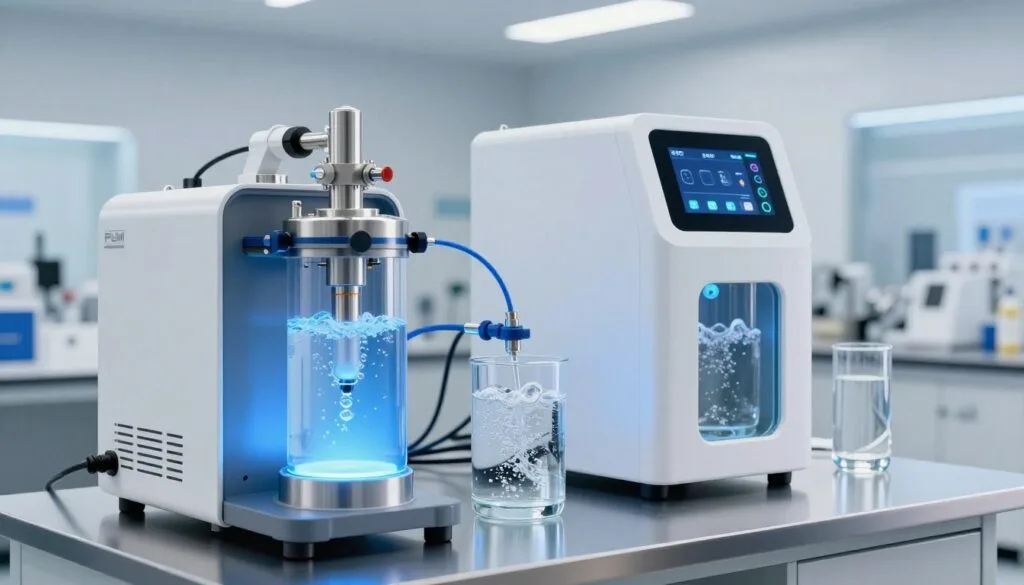
PEM (Proton Exchange Membrane) uses a thin membrane to keep hydrogen and oxygen apart during electrolysis. This separation helps dissolve more gas into the liquid with fewer byproducts.
Clean separation often means more stable dissolved hydrogen and less change in taste or chemistry.
Why some systems change pH
Alkaline ionizers shift pH by producing more hydroxide at one electrode. That raises alkalinity but can reduce dissolved gas concentration.
Buyers should treat alkaline claims as separate from dissolved gas goals. A higher pH does not always mean higher dissolved hydrogen.
Scaling, cells and long-term trade-offs
Hard local supply in Malaysia can cause scale on electrolysis cell surfaces. Scale lowers performance and raises service frequency.
Ask about cell materials, cleaning cycles, and claimed longevity. Research development histories (for example, 15 years of R&D) add credibility, but measured output matters most.
| Feature | PEM | Alkaline Ionizer | Traditional Electrolysis |
|---|---|---|---|
| Separation | Membrane-based separation, cleaner | Partial separation, pH shift | Limited separation, more byproducts |
| pH change | Minimal | Often alkaline | Variable |
| Maintenance | Moderate; membrane care | Higher; scale management | Higher; cell replacement |
| Best use case | Clinic reliability, neutral taste | Users seeking alkaline effect | Budget models, simple needs |
Practical tip: Match technology to expected years of ownership. Choose PEM when steady performance and low pH change matter. Pick alkaline systems only if pH change is a stated goal.
Certifications, measurement standards, and how to verify hydrogen concentration
Verifiable standards make it easier to compare device performance across brands. Buyers and clinics need clear test methods so numbers mean the same thing from lab to lab.
IHSA sets guidelines on how concentration should be measured and reported when therapeutic use is discussed. Consistent methods reduce confusion and let practitioners compare units on an even footing.
What JHyPA accreditation signals
JHyPA issues certifications under IHSA criteria. A JHyPA mark shows a compliance-style check has been run and that reported values follow standard measurement steps.
How measurement is done
High-accuracy labs use gas chromatography after a clear workflow: sample the poured cup, shake, extract the headspace gas, then read the instrument. This method is the reference used in product validation.
Reading spec sheets
Distinguish a claimed concentration from what is delivered in fresh-poured cups. Remember: 1 ppm = 1 mg/L, so ppm figures can be read as mg/L.
- Ask for certification proof and test reports.
- Ask how measurements were taken and whether they reflect realistic pours.
- Compare numbers only when methods match.
For clinical context and gut-related questions, see hydrogen water and gut.
Key specs that impact daily use at home, clinics, and small offices
Everyday convenience comes down to clear numbers: how much the tank holds, how much each cycle pours, and how fast a refill runs.
Output and tank size examples: A common configuration is a 2L tank that runs multiple ~500 mL cycles. That means a single fill can serve four typical drinking portions, making it easy to plan morning routines, post-workout refills, or patient cups in a clinic.
Interface, safety, and autos
Look for a touch-sensitive panel that works with wet fingers. It reduces slips and speeds operation during busy periods.
Auto power-off (for example after 5 minutes idle) adds a safety layer. Clinics and small offices benefit from that feature to prevent accidental runs and save energy.
Portability and daily use
Portable makers exist for on-the-move drinking. They suit staff who work between sites or travelers who want a compact unit that still delivers measurable output.
Finally, a good filter remains important. Clean input protects internal parts and keeps taste consistent, especially with local tap supplies in Malaysia.
- Estimate cycles: 2L = ~4 x 500 mL servings.
- Choose touch controls that work when wet.
- Prefer auto shut-off for safety and energy savings.
Maintenance and total cost of ownership in Malaysia
Smart owners split routine costs from repair and service risk. They treat consumables like filters as predictable annual expenses and set aside a small budget for occasional repairs or visits.
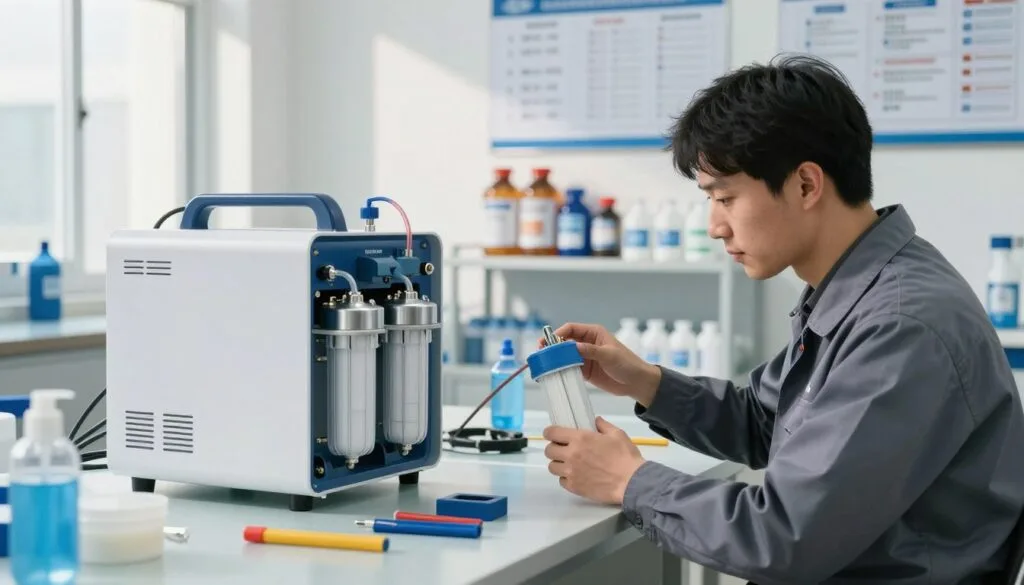
Filter replacement is commonly specified at 3,000 L or once per year, whichever comes first. That benchmark makes it easy to compare models and plan yearly spending.
Auto-cleaning functions and anti-bacterial technology (ABT) can reduce scale and lower the chance of extra service visits. Buyers should check whether the device still needs manual descaling despite those features.
Warranty and liability to compare before purchase
Compare warranty length and terms. A 10-year warranty and 1-million product liability are strong examples that matter for clinics and shared spaces.
- Estimate the annual amount of water generated at home to calculate filter costs.
- Confirm whether claimed “no service” designs still require periodic checks.
- Ask what the warranty covers and how long parts or service are guaranteed in Malaysia.
Practical tip: request a simple annual cost breakdown from sellers: filters, optional service, and expected years of use. That makes true ownership cost clear before purchase.
Comparing leading options mentioned in the market
Claims of extreme output can sound impressive, but practical checks reveal the true value.
Claim groups: one camp markets very negative ORP and very high ppb (example: -ORP988mV, >1600 ppb). The other promotes neutral pH PEM designs that report nano-level dissolved gas between 1.30–1.60 mg/L.
Ask how measurements were made: poured cup, test timing, and tap chemistry affect results. Translate units: 1,000 ppb = 1 ppm = 1 mg/L so “>1600 ppb” ≈ 1.6 mg/L.
Build, filtration and durability
Japan-made components and a long R&D record often signal quality. Look for documented test methods and third-party proof.
Durability targets (example: 12,000 L) tell how much total production a cell should handle before major service.
| Claim type | Typical spec | What to verify |
|---|---|---|
| High-ORP / high-ppb | -ORP988mV; >1600 ppb | Test timing, tap water, headspace method |
| Neutral pH PEM | 1.30–1.60 mg/L dissolved | ppm equivalence, repeat cycles, taste neutral |
| Filtration & cells | Rice husk activated carbon; platinum-coated titanium cell | Chlorine reduction, cell material specs, durability certs |
- Prefer devices with clear test reports and Japan-made filters if tap quality is a concern.
- Count on ppm/mg/L conversions to compare claims fairly.
Where to buy and get support from Wellness Concept in Malaysia
Buyers in Malaysia can get hands-on guidance and after-sales help by visiting Wellness Concept. Staff match real usage to specs, so shoppers leave confident about their choice.
Business hours
Open: Monday–Friday 9:30 am–6:30 pm; Saturday 10:00 am–5:00 pm; Sunday closed.
What to bring and prepare before visiting
Bring a note of your tap water type (tap water, filtered tap, or bottled). Include typical daily drinking volume and who will use the unit at home or in a small clinic.
List household size and routines so staff can suggest the right capacity and cycle count. Define health goals and taste preferences — neutral taste or slight alkalinity — to narrow options.
“Matching a product to real drinking habits beats choosing the highest spec on paper.”
- Ask about warranty length, filter replacement intervals, and local service response.
- Request an on-site demo or a verification of performance during handover.
| Topic | What to confirm | Benefit |
|---|---|---|
| Business hours | Visit times and appointment options | Plan around work and family schedules |
| Tap type | Sample or note local supply | Right filter and cell choice |
| After-sales | Warranty, filter cost, service lead time | Clear ownership costs and support |
Conclusion
The best choice balances verified performance with simple maintenance and local support.
Buyers should prioritize measurable dissolved delivery, steady output across cycles, and predictable upkeep that fits Malaysian routines. Check test reports and standards to confirm numbers match real pours.
Think of benefits as practical: improved hydration and a supportive role in broader wellness goals, not cures. Compare PEM against alkaline units by taste, intended use, and long‑term reliability.
Plan choices by daily dose — how much hydrogen water one will drink each day — and use research to form pointed questions. Visit Wellness Concept to test units, confirm warranties, and get after‑sales support before purchase.
FAQ
What is Wellness Concept: Hydrogen water generator for functional medicine in Malaysia?
Wellness Concept is a Malaysian provider focused on devices that deliver molecular hydrogen-rich drinking water aimed at supporting oxidative stress management and overall hydration. They supply home and clinic units with filtration, PEM electrolysis, and safety features designed to meet local water quality and wellness needs.
Why does hydrogen-rich water matter in functional medicine today?
Practitioners value dissolved hydrogen for its potential antioxidant effects and ability to target cellular oxidative stress. Research suggests low-dose molecular hydrogen may modulate signaling pathways and reduce inflammation, so clinicians and wellness-minded consumers consider it as a complementary hydration strategy alongside diet and lifestyle interventions.
How does molecular hydrogen support oxidative stress?
Molecular hydrogen acts as a selective reducer of certain reactive oxygen species and may help restore redox balance at the cellular level. Evidence comes from controlled studies and clinical reports showing improvements in biomarkers linked to oxidative damage when hydrogen-rich drinking water is incorporated into care plans.
What does the current scientific evidence say about antioxidant properties?
Available trials and lab studies show promising antioxidant and anti-inflammatory effects, but results vary by dose, duration, and population. Leading journals publish research on dissolved hydrogen’s role, yet larger randomized trials are still needed to establish broad therapeutic claims.
How should buyers interpret dissolved hydrogen concentration (ppb vs ppm, mg/L)?
Dissolved hydrogen can be reported in parts per billion (ppb), parts per million (ppm), or mg/L; 1 ppm equals roughly 1 mg/L. Typical therapeutic targets range from several hundred ppb up to 1.6 mg/L (1.6 ppm). Buyers should compare measured dissolved hydrogen values under real-use conditions rather than relying only on peak numbers.
What ensures performance consistency with continuous use?
Consistent output depends on stable power, quality electrodes (often platinum-coated), membrane integrity in PEM systems, and regular filter maintenance. Units with auto-clean cycles and clear service intervals maintain hydrogen concentration more reliably over years of use.
Does the unit change pH and how does that affect taste and concentration?
Some technologies alter pH while producing active gas; neutral pH PEM units focus on maximizing dissolved hydrogen without significant alkalinity shifts. Changes in pH can affect taste and may correlate with reduced dissolved hydrogen, so clinics preferring neutral taste often choose PEM systems designed for minimal pH change.
Is tap water compatible and what filtration is required?
Most home and clinic units accept treated municipal water but require pre-filtration to remove chlorine, metals, and particulates. Integrated filters—such as activated carbon or multi-stage cartridges—protect internal components and improve gas solubility. Always match filter media to local water quality.
What materials indicate good build quality and safety?
Look for food-grade housings, platinum-coated electrodes, certified membranes, and BPA-free contact parts. These materials improve catalytic performance, resist corrosion, and reduce contamination risk. Certifications from recognized labs provide added assurance.
What capacity and cycle output suit a family or clinic?
Smaller personal units produce 300–700 mL per cycle, while 2 L tanks or multi-cycle units fit families and small clinics. Consider daily consumption, clinic throughput, and whether simultaneous servings are needed. Units with repeatable cycles and short recharge times work best in shared settings.
How does PEM electrolysis differ from traditional electrolysis and alkaline ionizers?
PEM membrane systems separate hydrogen and oxygen effectively, producing neutral pH, high-purity dissolved gas without producing large amounts of alkaline byproduct. Traditional electrolysis and ionizers may alter pH significantly and rely on electrode reactions that can reduce dissolved gas purity over time.
Why do some systems change pH and how does that affect gas concentration?
Systems that split ionic content to create alkaline and acidic streams shift pH as a byproduct of ion migration. This often yields lower dissolved hydrogen in the neutral or alkaline output since more ions are involved in the separation process. Neutral-output designs prioritize dissolved gas concentration instead of alkalinity.
What service needs and scaling issues affect long-term performance?
Mineral scaling, biofilm buildup, and electrode wear reduce efficiency. Regular descaling, timely filter changes, and periodic component checks preserve output. Some units include anti-scaling features and auto-clean cycles, which cut maintenance frequency and protect long-term performance.
What certifications and measurement standards should buyers check?
Buyers should seek units tested to industry standards and backed by independent labs. Relevant standards include measurement protocols from hydrogen associations and recognized testing methods like gas chromatography. Certifications and lab reports help verify therapeutic claims and safety compliance.
What do IHSA guidelines and JHyPA accreditation signal?
IHSA-style guidelines and JHyPA-type accreditation indicate adherence to testing protocols, safety, and quality benchmarks in hydrogen-related devices. Accreditation signals a commitment to consistent performance and can help clinicians trust reported dissolved gas levels.
How is dissolved hydrogen measured, including gas chromatography references?
Measurement methods include dissolved gas meters, electrochemical sensors, and laboratory techniques such as gas chromatography with thermal conductivity or mass spectrometry. Laboratory methods provide precise mg/L or ppm values and are the gold standard for independent verification.
How should buyers read spec sheets comparing claimed vs delivered dissolved hydrogen?
Compare manufacturer claims with independent lab reports showing real-use measurements. Check test conditions—water source, temperature, cycle time—as these affect dissolved gas. Prioritize consistent, repeatable values over peak numbers achieved under ideal lab settings.
Which specs impact daily use at home, clinics, and offices?
Important specs include per-cycle output, cycle time, tank size, auto power-off, user interface safety (wet-finger safe), and portability. Also consider noise, energy use, and ease of replacing filters or cartridges in busy settings.
What output and tank size examples are common?
Typical examples include 2 L tanks suitable for families and clinic use, and smaller ~500–700 mL per-cycle personal units. Multi-cycle designs allow larger cumulative daily output without increasing unit footprint.
What portability options exist for on-the-move users?
Portable units offer compact tanks, rechargeable batteries, or USB power and deliver a single high-hydrogen cycle for travel. They prioritize light weight, sealed cartridges, and easy refill mechanisms for convenience outside the home.
How often should filters be replaced and what are typical cycles?
Many systems recommend filter replacement around 3,000 L of throughput or roughly once per year for average household use. Actual frequency depends on local water quality and usage volume; the unit’s indicators or app alerts often guide replacements.
Do auto-cleaning functions and anti-bacterial technologies matter?
Yes. Auto-clean cycles and anti-bacterial coatings reduce biofilm and scaling, maintain performance, and lower maintenance time. These features are valuable in clinics and high-use households to sustain dissolved gas output and hygiene.
What warranty and liability coverage should buyers compare?
Compare warranty length, coverage for electrodes and membranes, and whether service centers exist locally. Clear liability terms and accessible customer support in Malaysia help ensure repairs and part replacements remain straightforward.
How should consumers evaluate high-ORP and high-hydrogen claims?
Evaluate manufacturer claims like -ORP988 mV or >1600 ppb against independent lab data. ORP alone doesn’t prove dissolved gas concentration. Look for simultaneous mg/L or ppm measurements and third-party validation to confirm performance.
What are typical dissolved hydrogen ranges for neutral-pH PEM generators?
Neutral-output PEM devices often deliver nano- to milligram-per-liter levels in the range of about 1.30–1.60 mg/L under ideal conditions. Real-world figures may vary, so validated measurements under normal tap water conditions are important.
Are Japanese-made components and R&D track records important?
Components manufactured in Japan often reflect high quality control, long R&D histories, and durability targets—some rated for tens of thousands of liters. Buyers prioritize documented durability (for example, multi-thousand-liter lifespan) and proven component longevity.
What built-in filtration examples help reduce chlorine and impurities?
Examples include activated carbon (including rice-husk carbon), sediment pre-filters, and multi-stage cartridges that reduce chlorine, VOCs, and particulates. Effective pre-filtration improves taste and protects internal catalytic parts.
Where can customers buy and get support from Wellness Concept in Malaysia?
Wellness Concept sells through local showrooms, authorized dealers, and online channels. They provide after-sales support, service centers, and replacement parts locally to ensure long-term operation and compliance with Malaysian water standards.
What are typical business hours and how to contact support?
Business hours vary by outlet; many showrooms operate weekdays and limited weekend hours. Customers should check the company website or call listed support numbers to confirm hours and schedule demonstrations or service visits.
What should customers prepare before visiting a showroom?
Customers should note their water source (municipal or well), household or clinic size, daily consumption needs, and any health goals. Bringing a recent water quality report helps reps recommend appropriate filtration and unit capacity.