
Currently Empty: RM0.00

0 Comments
Can one simple drink change how the mind responds to stress and aging? This article frames past research in a clear way for readers in Malaysia who want evidence, not hype.
Wellness Concept (Malaysia) presented a neutral, science-first guide to hydrogen water brain function studies. It explained key terms such as hydrogen-rich water (HRW) and molecular hydrogen so readers knew what trials actually tested.
The overview summarized past results on oxidative stress, inflammation, and blood-brain barrier access. It noted animal-model findings and highlighted what human trials did and did not show.
Readers learned how to read methods, endpoints, and reproducibility instead of relying on marketing claims. The tone stayed factual and practical, aimed at Malaysians who prefer clear evidence and cautious interpretation.
Key Takeaways
- Wellness Concept provided a science-forward summary for Malaysians.
- The article clarified terms like HRW and molecular hydrogen.
- Past work suggested effects on oxidative stress and inflammation.
- Animal results did not always translate to human outcomes.
- Readers were urged to value controls, endpoints, and reproducibility.
Research Snapshot: What Hydrogen Water Is and Why Brain Function Is Being Studied
This short primer explains how drinks with extra dissolved H2 were defined in papers and why researchers linked them to cognitive outcomes.
Hydrogen-rich water vs regular water: In tests, “hydrogen water” described plain fluid with added dissolved molecular gas. Producers called this “free” H2 to contrast it with hydrogen bound to oxygen in regular water.
Why oxidative stress drew attention
Many labs focused on oxidative stress because free radicals can damage cells. Authors proposed that reducing these radicals might yield neuroprotective effects, though most results were lab endpoints rather than clinical diagnoses.
What molecular hydrogen means here
Molecular hydrogen refers to H2 as a dissolved gas, not the hydrogen atom already bonded to oxygen in a water molecule. That difference shaped how experiments were designed and which outcomes they measured.
Readers were advised to check exact outcome measures and look up original papers by doi when possible. Claims of antioxidant benefits appeared often, but benefit magnitude and real-world effects remained mixed.
How Molecular Hydrogen Could Affect the Brain: Proposed Mechanisms
Researchers have proposed testable mechanisms that may explain observed signals in lab work. These ideas describe possible biological routes, not established clinical benefits.
Antioxidant activity and selective targeting
One prominent narrative is selective antioxidant action. Authors suggested that molecular hydrogen could neutralize certain radicals while sparing needed signaling species.
Oxidative stress and oxygen-related damage
Oxidative stress pathways link excess oxygen-derived species to cellular damage. Reducing those reactive molecules might help preserve cellular function in vulnerable tissue, though human proof is limited.
Inflammation signaling as a disease factor
Inflammation cascades are a common disease factor in neuro research. Many papers measured cytokines and behavioral endpoints to test whether anti-inflammatory effects translated to altered outcomes.
Barrier access: permeation and reach
Because small, non-ionic molecules can cross membranes, authors argued for possible blood-brain barrier access. This permeability was offered as a rationale for central effects, but it remains a proposed mechanisms claim that depends on study design and dose (see doi references in primary reports).
What Animal Models Reveal About Cognition and the Hippocampus
Animal work uses controlled groups to test cognitive change when variables are fixed. Small rodents offer strict control of diet, fluid intake, and timing so teams can link treatment to outcome cleanly.
Senescence model and spatial memory
The senescence-accelerated prone mouse 8 (SAMP8) is a common model for age-related decline. In a water maze test, this mouse’s spatial ability is measured by escape time and search patterns.
Comparison: treatment versus control
Gu et al., 2010 (doi: 10.3164/jcbn.10-19) compared hydrogen-rich water to regular water. Short-term intake (30 days) preserved maze performance versus controls.
Hippocampus outcomes and biomarkers
Longer treatment (18 weeks) reduced neurodegeneration in the hippocampus. Reported results also showed higher brain serotonin levels and increased serum antioxidant activity.
| Parameter | Treatment | Control |
|---|---|---|
| Duration | 30 days / 18 weeks | Same schedule |
| Memory (water maze) | Preserved spatial ability | Age-related decline |
| Hippocampus | Less neurodegeneration | Typical degeneration |
| Biomarkers | ↑ serotonin, ↑ serum antioxidant activity | No change or lower levels |
For method details and exact endpoints, see Gu et al., 2010; doi: 10.3164/jcbn.10-19.
Hydrogen Water Brain Function Studies: Evidence Quality and What “Results” Really Mean
Evaluating the quality of evidence helps readers separate laboratory signal from real-world claims.
Why many findings start in animals. Ethical limits, shorter lifespans, and controlled variables make mice and mouse work common in early research. These models let teams test mechanisms fast and at lower cost.
Common trial structure
Most experiments use matched groups: a control group receives regular fluid and a treatment group receives the test drink. Researchers match age, sex, and weight so comparisons are fair.
Interpreting results
Effect size matters more than p-values alone. Small groups can show statistically significant effects that lack biological meaning. Duration also shifts endpoints: a few days may alter oxidative markers, while weeks are needed to see behavior or tissue change.
Practical checks for readers:
- Look for author names and doi to verify sources.
- Note sample size, randomization, and blinding.
- Check if results were reproduced by independent teams.

| Feature | Control group | Treatment group |
|---|---|---|
| Matching | Age, sex, weight matched | Same matching criteria |
| Duration | Day to week timelines | Day to several weeks |
| Common endpoints | Baseline behavior, biomarkers | Oxidative markers, behavior, tissue changes |
| Interpretation tips | Check sample size and author | Assess effect size and replication |
Neuroinflammation and Behavior Research in a Valproic Acid Mouse Model
Researchers used a maternal valproic acid model to probe how prenatal immune disruption links to later behavior.
Why inflammation drew attention: ASD-linked immune dysregulation was framed as a plausible disease factor driving altered development. Peripheral and central inflammation markers prompted teams to test whether reducing immune signals changed outcomes.
Model and exposure: Pregnant mice received VPA 600 mg/kg i.p. on gestation day 12.5. Litters were then assigned to multiple groups to compare interventions and controls.
Timing and consumption protocols: Offspring exposure to hydrogen-rich water (H2 >1.8 mg/L, 245 mL in sealed aluminum cans) followed three schedules: GD1–PND1, GD13–PND21, and GD13–PND42. Timing mattered for interpreting downstream effects.
Behavioral battery (PND35–42):
- Open field test and novelty-suppressed feeding as stress-related readouts (time-in-center, latency-to-feed, locomotion).
- Social interaction test measured social preference changes versus control group.
- Hot-plate test checked sensory hyperpathia, while contextual fear conditioning gave mixed results on memory ability.
Overall, certain groups showed reduced anxiety-like behavior and improved social preference. Contextual fear conditioning outcomes were limited, so interpretation requires caution and a doi lookup for methods.
Biomarkers in Hydrogen Research: Blood, Serum, and Cytokine Levels
Blood-based markers became a practical bridge between observed behavior and underlying biology. When direct tissue sampling is limited, researchers collected blood and separated serum by centrifugation to get reproducible measures.
Common lab tool: ELISA assays quantified cytokines such as IL-6 and TNF-α after behavioral testing. These markers gave teams a snapshot of systemic inflammation.
Changes in cytokine levels were interpreted as supportive evidence for reduced inflammation signaling. Authors compared each group (control vs treated) to see if serum IL-6 and TNF-α fell alongside behavioral gains.
Oxidative stress markers were reported too. Hydroperoxide levels and measures of antioxidant activity appeared in several reports as complementary endpoints.
Why biomarkers matter but do not prove clinical benefit: A drop in blood markers can suggest a pathway, yet it does not confirm improved clinical outcomes on its own. Many papers paired biochemical assays with behavior to strengthen causal claims.
- Blood collection → serum separation by centrifugation for ELISA.
- Primary cytokines: IL-6 and TNF-α.
- Oxidative endpoints: hydroperoxide and antioxidant activity measured alongside behavior.
Human Evidence So Far: What Clinical Studies Suggest and What They Don’t
Human trials so far offer suggestive findings, but clear answers remain limited by design and scale.
Oxidative stress outcomes in people: Small trials reported mixed oxidative stress results. Some reported lower hydroperoxide or improved antioxidant activity; others showed no clear change. These inconsistent signals mean readers should treat biochemical shifts as preliminary.
Metabolic syndrome signals: A 10-week clinical trial noted reductions in LDL and total cholesterol, a rise in HDL, higher antioxidant activity, and lower inflammatory markers such as TNF-α. These are indirect endpoints that suggest systemic effects rather than proven clinical benefit.
Performance research in athletes: Small performance research trials measured blood lactate, perceived fatigue, and sprint power output. Many found lower lactate and less fatigue with higher power in short efforts versus regular water or placebo. These changes do not automatically translate to improved cognitive outcomes.
- Common limitations: small sample sizes and short duration.
- Protocol differences: varying dissolved gas concentrations and packaging affect results.
- Practical tip: verify the full text and doi to check methods and blinding.
Interpreting “Antioxidant” Claims in Context
Claims about antioxidant action often hinge on which lab markers were measured and how those markers were reported.
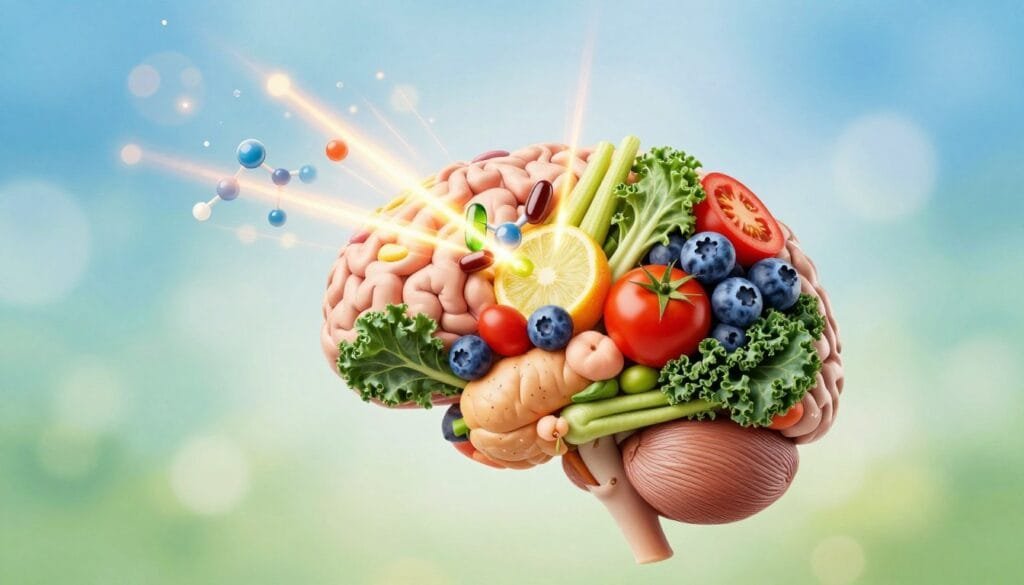
What antioxidant benefits could mean—and what is still unproven
Measured endpoints in papers usually include oxidative stress markers such as hydroperoxides, assays of antioxidant activity, and cytokine panels. These give a snapshot of biochemical change, not a clinical cure.
In theory, lowering oxygen-related damage and neutralizing free radicals may protect neurons and support cognitive health. However, long-term human evidence linking those biochemical shifts to lasting benefit is limited.
Why plain water remains the baseline hydration standard
Regular water is the simplest, safest choice for hydration. Adequate fluid intake alone can change alertness and perceived energy, which affects mental function more than many unproven supplements.
“Readers should match each claim to a specific test, endpoint, or doi before accepting broad neuroprotective language.”
How to read claims critically:
- Check whether results come from mice, athletes, or clinical groups.
- Look for doi and independent replication before trusting broad effects.
- Remember that small biochemical changes do not prove long-term protection from damage.
For research-focused guidance, see this page on hydrogen water for cancer prevention, which models how to weigh lab claims against clinical proof.
Safety, Dosage Uncertainty, and Product Variability
Consumers should know that safety and product variability shape how research results map to real-world use.
GRAS status and safety considerations
Generally Recognized As Safe (GRAS) listings indicate that the product is not known to cause harm when consumed at common levels. That does not mean it is proven to treat disease or deliver consistent benefits.
Why concentration varies by container and manufacturing
Packaging matters. Dissolved gas levels fall faster in permeable bottles. Non-permeable cans and sealed containers keep concentrations higher. Manufacturing steps and fill methods also create variation between brands.
What research used for daily consumption
Reported intake in trials ranged from about 600 ml/day to 0.9–1 L/day, and up to 1.5–2 L/day in some protocols. Comparing outcomes requires matching concentration, dose, and duration.
| Feature | Typical trial range | Practical note |
|---|---|---|
| Daily consumption | 600 ml — 2 L/day | Protocols vary; match dose and duration to interpret effects |
| Container type | Sealed cans vs bottles | Use non-permeable packaging to retain gas levels |
| Reported outcomes | Oxidative stress markers, metabolic signals | Biochemical change ≠ clinical proof; check doi for methods |
Practical advice: Treat GRAS status as a safety baseline. Check labels for concentration, prefer non-permeable containers, and compare product details with trial doi if assessing claimed effects.
Research Methods Readers Will See in Hydrogen Water Articles
A simple guide to common methods helps non-experts read articles with confidence.
Study design basics: Trials usually compare a treatment group to a control group and try to use a placebo when feasible. Blinding challenges appear often in liquid interventions because packaging, taste, or container type can reveal assignment.
Placebo, control, and blinding challenges
Proper randomization and a believable placebo reduce bias. When blinding fails, results risk overestimating effects. Readers should look for statements about who was blinded and how the placebo matched the test item.
Common endpoints you will see
Typical endpoints include brain function tests and behavior observations. Labs also report inflammation markers and oxidative stress measures as biochemical readouts.
How to verify an article
Check the author list, the doi, and the journal. Confirm whether independent groups reproduced the results. Reproducibility and null findings often add more weight than a single positive report.
| Feature | What to look for | Why it matters |
|---|---|---|
| Design | Randomized, blinded, matched groups | Reduces bias and allows fair comparison |
| Endpoints | Brain function tests, behavior, inflammation, oxidative stress | Shows both clinical and biochemical signals |
| Verification | Author reputation, doi, independent replication | Improves confidence in results and reproducibility |
Quick checklist: note sample size, control procedures, doi, and whether the author team reported null effects. Well-run article sections often explain limitations and make data accessible for review.
How Wellness Concept Helps Malaysians Follow Hydrogen and Brain Research
Wellness Concept acts as a local hub that helps readers trace original papers and judge claims in this article. They teach practical steps to follow a doi trail and check an author’s methods.
Where to access research-focused guidance at Wellness Concept
Readers can bring a citation or a product claim and staff will show how to compare trial design, concentration, packaging, and safety notes. The team explains which results matter and which endpoints only hint at possible benefits.
Business hours for visits and inquiries in Malaysia
Monday 9:30 am–6:30 pm
Tuesday 9:30 am–6:30 pm
Wednesday 9:30 am–6:30 pm
Thursday 9:30 am–6:30 pm
Friday 9:30 am–6:30 pm
Saturday 10:00 am–5:00 pm
Sunday Closed
Practical tip before you visit
Bring the doi, the author name, and specific questions about study design or endpoints. Staff will help you separate marketing claims from verifiable findings and explain how packaging or concentration may change real-world levels.
Conclusion
, The article closes by weighing what trial data actually show about modest biochemical signals and real-world outcomes.
The summary notes that many key results came from mice work, including hippocampus changes, and that translating those findings to human brain ability remains uncertain. Leading hypotheses include oxidative stress reduction, inflammation modulation, and possible barrier access, but no proven neuroprotective effects exist yet.
Plain water stays the baseline for hydration. Product concentrations and protocols vary, so readers should check doi references and prefer reproducible results over single-report claims. For Malaysia-focused guidance and doi-led review, Wellness Concept can help with next steps and ongoing research updates.
FAQ
What is meant by “hydrogen-rich water” compared with regular water?
Hydrogen-rich water contains dissolved molecular hydrogen gas (H2) that is added or infused into water. This extra dissolved gas is what researchers test against plain drinking water to see if it changes markers like oxidative stress, inflammation, or behavioral outcomes in animal and human trials.
Why do researchers focus on oxidative stress and free radicals in these trials?
Oxidative stress and reactive oxygen species are thought to contribute to cell damage and neurodegenerative processes. Many experiments test whether dissolved H2 acts as a selective antioxidant, reducing harmful radicals and altering downstream inflammation or cellular signaling linked to disease or cognitive decline.
How could molecular hydrogen affect the central nervous system?
Proposed mechanisms include selective scavenging of certain reactive oxygen species, modulation of inflammatory signaling pathways, and potential penetration of the blood-brain barrier. These actions might protect neurons, influence neurotransmitter balance, or preserve cellular function under stress.
What have animal models shown about memory and the hippocampus?
In rodent studies, some groups report improved performance on spatial memory tasks, reduced hippocampal neurodegeneration, and shifts in neurotransmitter and serum antioxidant measures when animals receive H2-enriched fluid versus plain fluid. Results vary by model, dose, and timing.
Are key preclinical studies cited for context?
Yes. For example, Gu et al., 2010 (doi: 10.3164/jcbn.10-19) is often referenced as a contextual piece in the literature examining neuroprotective or antioxidant effects in animal models.
How strong is the evidence from mouse and rat studies?
Most neural findings are preclinical. While many reports show positive signals, study designs, sample sizes, and reproducibility differ. Readers should interpret effect sizes, experimental duration, and endpoints carefully before assuming clinical relevance.
What kinds of behavioral tests do researchers use in autism-related rodent models?
Common assays include the open field and novelty-suppressed feeding for anxiety and stress, social interaction tests for sociability, the hot-plate for sensory response, and contextual fear conditioning for certain memory domains. Timing of exposure (prenatal vs postnatal) also influences outcomes.
Which blood and serum biomarkers appear in trials?
Studies often measure cytokines such as IL-6 and TNF-α by ELISA, general antioxidant activity, and oxidative stress markers including hydroperoxide. Changes in these markers are used to link systemic effects to brain-related hypotheses.
What does human research show so far?
Clinical trials are limited and small. Some report modest changes in oxidative stress markers, metabolic parameters like cholesterol, or exercise recovery metrics such as lactate and fatigue. Findings are mixed and require larger, well-controlled studies for confirmation.
How should readers interpret “antioxidant” claims?
Antioxidant activity in a laboratory or animal setting does not automatically translate to clinical benefit. Plain drinking water remains the primary hydration standard, and claimed neuroprotective benefits need replication in rigorous human trials.
Is consuming dissolved molecular hydrogen safe, and how consistent are products?
General safety appears favorable in tested ranges, but concentration varies by product, packaging, and storage. Regulatory and dosing guidance remains limited, so product variability and unclear optimal intake levels are important considerations.
What methods should readers look for when evaluating a study?
Good studies use randomized control groups, blinding where possible, clear endpoints (behavioral tests, biomarkers), and complete reporting including author names, DOI, and reproducibility details. These factors help assess reliability.
How can Wellness Concept help local readers follow this research?
Wellness Concept offers guidance on accessing and interpreting research, and can point to credible sources and study summaries. They maintain regular business hours for inquiries and visits in Malaysia.
What are the business hours for Wellness Concept in Malaysia?
Monday 9:30 am-6:30 pm; Tuesday 9:30 am-6:30 pm; Wednesday 9:30 am-6:30 pm; Thursday 9:30 am-6:30 pm; Friday 9:30 am-6:30 pm; Saturday 10 am-5 pm; Sunday Closed.