
Currently Empty: RM0.00
0 Comments
If your digestion feels slow, bloated, or uncomfortable, the problem might not be what you’re eating — it could be what you’re missing: fiber.
Many people focus on protein, vitamins, and calories in their diet, but overlook one of the most important nutrients for digestive health: dietary fiber.
Fiber plays a critical role in maintaining healthy digestion, supporting gut bacteria, and helping the body remove waste effectively.
Yet studies show that many adults consume far less fiber than their bodies actually need.
Understanding why fiber is essential for digestive health can help you improve your gut balance, energy levels, and overall wellbeing.
What Is Dietary Fiber?
Dietary fiber is a type of carbohydrate found in plant-based foods that the body cannot fully digest.
Unlike other carbohydrates, fiber passes through the digestive system relatively intact, where it performs important functions that support gut health.
There are two main types of fiber:
Soluble Fiber
Soluble fiber dissolves in water and forms a gel-like substance during digestion.
It helps:
- regulate blood sugar levels
- support healthy cholesterol levels
- slow digestion for better nutrient absorption
Foods rich in soluble fiber include oats, beans, apples, and flaxseeds.
Insoluble Fiber
Insoluble fiber does not dissolve in water and helps add bulk to stool.
This supports:
- regular bowel movements
- improved digestive flow
- reduced constipation
Common sources include whole grains, vegetables, and nuts.
Both types of fiber are important for maintaining digestive balance.
Why Fiber Is So Important for Digestive Health
Fiber supports several essential functions in the digestive system.
1. Supports Healthy Gut Bacteria
Your digestive system contains trillions of microorganisms known as the gut microbiome.
Fiber acts as food for beneficial gut bacteria, helping them grow and maintain balance.
A healthy microbiome can support:
- digestion
- immune function
- metabolic balance
2. Promotes Regular Bowel Movements
Fiber helps move waste through the digestive tract more efficiently.
This can help prevent problems such as:
- constipation
- irregular bowel movements
- sluggish digestion
Regular elimination is an important part of maintaining digestive health.
3. Helps Remove Waste and Toxins
Fiber can bind to certain waste products and help carry them out of the body through the digestive system.
This process supports the body’s natural detoxification functions.
4. Helps Control Blood Sugar Levels
Soluble fiber slows the digestion of carbohydrates, helping regulate blood sugar levels after meals.
Stable blood sugar can help maintain steady energy throughout the day.
5. Supports Weight Management
High-fiber foods often promote feelings of fullness.
This may help reduce overeating and support healthy weight management.
Signs You May Not Be Getting Enough Fiber
A low-fiber diet can contribute to several digestive issues.
Common signs may include:
- frequent constipation
- bloating after meals
- irregular digestion
- low energy levels
- frequent hunger or cravings
Increasing fiber intake gradually can help support digestive balance.
Best Natural Sources of Fiber
Fiber can be found in many plant-based foods.
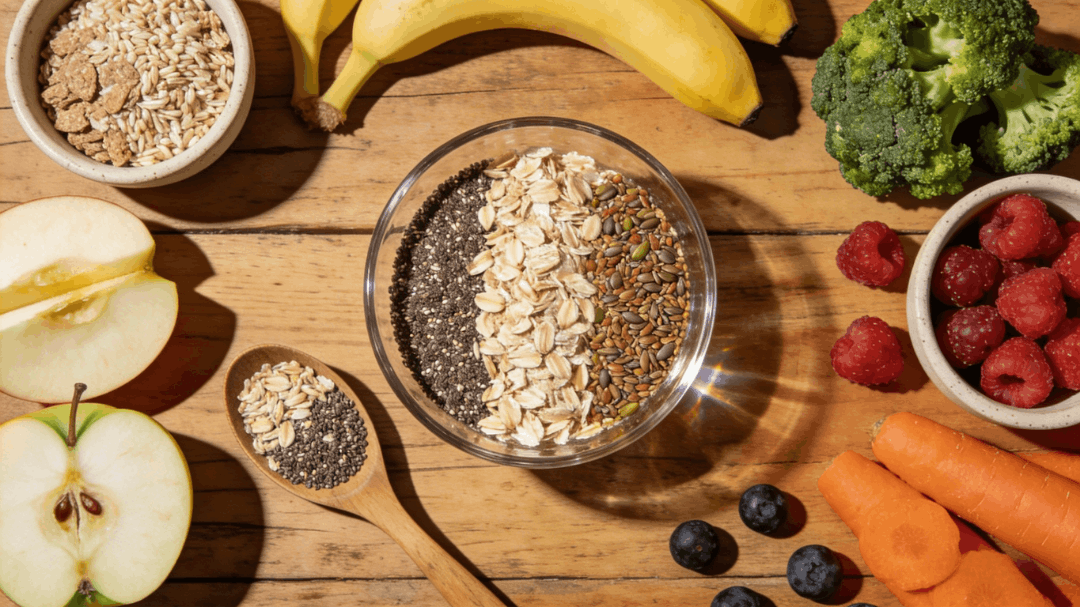
Some excellent sources include:
- vegetables such as broccoli and carrots
- fruits like apples, pears, and berries
- whole grains such as oats and brown rice
- legumes like beans and lentils
- seeds including chia and flax seeds
A diet rich in whole foods typically provides a healthy balance of fiber.
How Much Fiber Do You Need?
Health experts generally recommend around:
- 25 grams per day for women
- 30–38 grams per day for men
However, many people consume far less than this amount due to modern diets that are high in processed foods.
Gradually increasing fiber intake while drinking enough water can help support healthy digestion.
Simple Ways to Increase Fiber Intake
Improving fiber intake can start with small daily habits.
You may consider:
- adding vegetables to every meal
- choosing whole grains instead of refined grains
- including fruits as snacks
- incorporating fiber-rich foods like oats, seeds, and legumes
For some individuals, fiber supplements or plant-based nutritional products may also help support digestive balance.
When Should You Seek Professional Guidance?
If you experience persistent digestive symptoms such as bloating, constipation, or irregular bowel movements, it may be helpful to review your diet and lifestyle habits.
Speaking with a wellness professional can help you understand how nutrition and daily habits affect your digestive health.
Speak With Our Wellness Consultant
If you would like guidance on improving digestive health and increasing fiber intake safely, you may contact our wellness consultant.
Wellness Consultant: Ms Hew
📞 WhatsApp / Call: +60 16-211 6625
She can provide personalized advice on nutrition, lifestyle habits, and wellness strategies that support digestive balance.
Final Thoughts
Fiber is one of the most essential nutrients for maintaining healthy digestion and gut balance.
Yet many people do not consume enough fiber in their daily diets.
By understanding the role fiber plays in supporting gut bacteria, digestion, and overall wellbeing, you can make better choices that support long-term health.
Sometimes improving digestion begins with a simple step: giving your body the fiber it needs.