
Currently Empty: RM0.00

0 Comments
Surprising fact: the digestive tract hosts trillions of microbes and the enteric nervous system holds over 500 million neurons, which helped scientists frame the gut as a kind of “second brain.”
Researchers found many microbes can produce neurotransmitters such as serotonin. This helps explain why stress can cause butterflies and appetite shifts.
Wellness Concept offers friendly guidance for people in Malaysia who want gentle, practical steps for mood and digestive health. Small, steady habits often matter most.

This article will explain how the gut and brain trade signals, how certain strains act like psychobiotics, and what trials do and don’t prove. It will also cover local food examples and a clear path to start small.
Need personal advice? Reach out on WhatsApp at +60123822655 during business hours: Monday–Friday 9:30 am–6:30 pm, Saturday 10 am–5 pm. Sunday closed.
Key Takeaways
- The gut and brain constantly exchange signals that shape mood and choices.
- Certain probiotic strains can produce neurotransmitters linked to mood.
- Gut-focused strategies complement lifestyle and professional care.
- Results often appear over weeks, not days, in clinical timelines.
- Wellness Concept can offer Malaysia-focused, practical starting steps via WhatsApp.
Why the gut-brain connection matters for mood and mental well-being
Daily mood shifts often trace back to signals sent between the digestive tract and the nervous system.
The axis relays messages through blood-borne hormones and direct nerve pathways. Roughly 90% of the body’s serotonin is made by specialised cells in the gut lining, so digestive balance can affect mental health.
People notice this in simple ways. Butterflies before a presentation, loss of appetite when worried, or tummy discomfort during tension are common signs.
Shared pathways link hormones, immune signals and inflammation, which helps explain why mood shifts and digestive symptoms often appear together.
- Everyday effect: Gut signals shape stress reactivity and resilience.
- Biology: Serotonin in the gut supports appetite and basic mood regulation.
- Reality check: Supporting gut balance is a helpful pillar, not a cure-all.
| Factor | How it affects mood | Practical tip |
|---|---|---|
| Serotonin production | Modulates appetite and emotional tone | Eat regular fibre-rich meals |
| Vagal and nerve signals | Trigger quick anxiety responses (butterflies) | Try slow breathing when stressed |
| Inflammatory signals | Can worsen mood in some people | Choose anti-inflammatory foods gradually |
If readers want personalised guidance, Wellness Concept is available on WhatsApp at +60162116625 during business hours: Monday–Friday 9:30 am–6:30 pm and Saturday 10 am–5 pm. Sunday closed.
Inside the gut-brain axis: the body systems that keep “the second brain” talking
A network of nerves, hormones, and immune signals lets the digestive tract relay its state to the brain in real time.
Enteric nervous system: 500 million neurons shaping digestion and emotion
The enteric nervous system sits inside the GI tract and has over 500 million neurons. It processes local information and coordinates digestion with little help from the brain.
That local control explains why people feel sensations in the stomach during stress. The enteric nervous network influences motility, secretion, and local reflexes.
Vagus nerve: the two-way superhighway linking gut signals to the brain
The vagus nerve transmits sensory reports from the gut to the brain and sends motor commands back to adjust digestion.
Some reflexes run entirely inside the gut (intrinsic), while others involve the central nervous system (extrinsic). This two-way flow supports rapid, coordinated responses to meals or stress.
Gut microbiome: microbes that produce neurotransmitters and immune signals
The microbiome is a community of microbes that makes metabolites and neurotransmitter precursors. These chemicals can enter the bloodstream and influence brain pathways.
Clinical links exist between functional GI symptoms and anxiety, so a whole-system approach often helps both digestion and mood.
| System | Role | Practical support |
|---|---|---|
| Enteric nervous | Local control of motility and sensation | Eat regular, fibre-rich meals; hydrate |
| Vagus nerve | Rapid two-way signalling with the brain | Practice slow breathing and gentle movement |
| Microbiome | Produces metabolites and neurotransmitter precursors | Include fermented foods and diverse fibres |
For personalised explanations on these systems and how to support them, message Wellness Concept on WhatsApp at +60162116625 during business hours.
Understanding probiotics, prebiotics, and “psychobiotics”
Certain live cultures and fermentable fibers work together to support digestive balance and mental resilience.
Common sources and notable strains
Probiotics are live microbes that may offer health benefits when eaten regularly. Specific strains matter; for example, Lactobacillus helveticus and Bifidobacterium longum have been explored for stress responses.
Regular choices include yogurt and kefir for dairy options, while kimchi and tempeh serve as plant-based fermented choices. These fermented foods help build diversity among gut bacteria over time.
Supplements and prebiotic support
Daily maintenance supplements often range from 10–50 billion CFU. Consumers should check strain-specific labeling, storage notes, and expiration dates; refrigerated formulas may keep potency longer.
Prebiotics are fermentable fibers that feed beneficial microbes. Galacto-oligosaccharides (GOS) are a well-studied example; they can influence attention bias in small trials even when mood shifts were not clear.
- Pair probiotic-rich foods with prebiotic fiber to support a thriving microbial ecosystem.
- Look for named strains on labels and modest CFU ranges for daily use.
For product selection help and local food ideas in Malaysia, message Wellness Concept on WhatsApp at +60162116625 (Mon–Fri 9:30 am–6:30 pm; Sat 10 am–5 pm; Sun Closed). Learn more about the health benefits of probiotics.
Mechanisms that link gut health and mood
Chemical signals from the gut shape how the brain interprets stress and reward.
Neurotransmitters from enteroendocrine cells
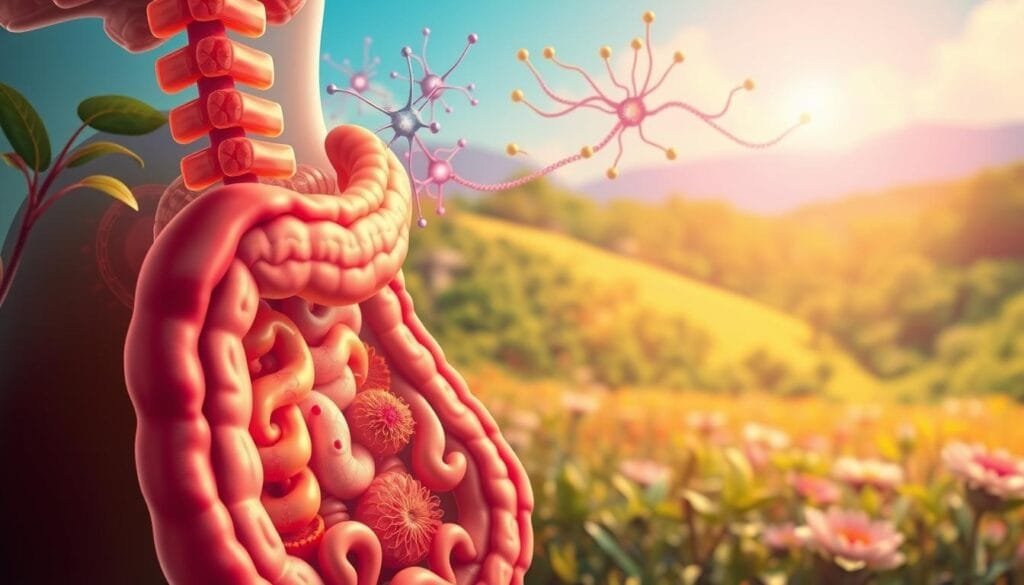
Specialised enteroendocrine cells release serotonin, GABA, and dopamine into local circuits. Nearly 90% of serotonin receptors sit in intestinal tissue, so these messengers affect motility, sensation, and emotional tone.
Vagal signaling and stress hormones
The vagus nerve acts as a rapid reporting line in the nervous system. It carries updates about microbial metabolites, nutrient absorption, and inflammatory status to the brain.
Certain bacteria can also influence cortisol, which may ease or amplify stress reflexes depending on balance.
Inflammation and barrier integrity
When intestinal permeability rises, inflammatory molecules may enter circulation and disrupt neural pathways. That can link gut irritation with mood swings.
Microbial balance shapes which metabolites are produced. Those metabolites determine whether signals calm or sensitize brain circuits.
“Mechanisms are multifactorial and vary by person, which explains different responses to similar interventions.”
| Mechanism | Primary effect | Practical note |
|---|---|---|
| Enteroendocrine signalling | Releases serotonin, GABA, dopamine | Support with balanced meals and fibre |
| Vagal input | Fast brain updates on gut state | Try calm breathing and regular movement |
| Barrier & inflammation | May alter neural function | Reduce chronic irritants and manage stress |
For tailored advice on calming pathways and local health choices, message Wellness Concept via WhatsApp at +60162116625 during business hours.
Gut-brain connection: Can probiotics make you happier?
Several trials suggest digestive improvement can precede calmer feelings and better sleep.
Encouraging but varied findings: research shows some strains, such as Lactobacillus rhamnosus in trials, produced reduced anxiety within weeks for some people. Results are not uniform across all groups.
Many notice physical changes first — steadier digestion, less bloating — and then report improved mood or sleep as gut signalling stabilises over time. These shifts often take several weeks with regular intake.
Outcomes depend on strain selection, dose, adherence, and baseline symptoms. There is no single protocol that suits everyone, so realistic expectations are key.
Best practice: combine targeted supplements with a balanced diet and stress-management habits. Studies show this paired approach often yields stronger benefits than isolated use.
Track GI and mood markers weekly to spot small changes. For help starting a plan in Malaysia, contact Wellness Concept on WhatsApp at +60162116625 during business hours.
What the studies show—and what they don’t
Animal research has mapped precise mechanisms that are harder to confirm in people.
Rodent studies show strong, mechanistic signals. For example, some mouse experiments linked Lactobacillus rhamnosus to reduced stress-like behaviour via the vagus nerve. These findings help researchers build biological models of how microbes affect the nervous system.
Human research is more mixed. A New Zealand study of L. helveticus R0052 + B. longum R0175 found no clear benefit for low mood. Another trial of L. rhamnosus JB-1 in healthy men reported no mood changes. Large observational cohorts link depleted bacteria with depression, but they cannot prove cause-and-effect.
Why results vary across trials
- Strain specificity: different strains—even within one species—can yield divergent outcomes, so exact labels matter.
- Study design limits: small samples, short follow-ups, and mixed participants reduce clarity.
- Confounders: diet, medications, and lifestyle can mask or mimic effects in human studies.
| Evidence type | Main finding | Practical takeaway |
|---|---|---|
| Rodent mechanistic studies | Clear pathways (vagus-dependent effects) | Guide targets for human research |
| Randomised trials in people | Mixed results across strains and populations | Interpret claims by strain and context |
| Observational cohorts | Associations between microbiota and depression | Suggest links but not causation |
“Promising, but not definitive—larger, well-designed trials are needed to confirm which strains, doses, and durations help most.”
Practical advice: view bold marketing claims critically. Speak with Wellness Concept on WhatsApp at +60162116625 for help interpreting studies and choosing products suited to local needs in Malaysia.
Probiotic effects on depression, anxiety, and cognitive function
Controlled studies suggest select formulations may nudge emotional and cognitive measures in people with baseline symptoms. Evidence is modest but consistent enough to guide practical expectations.
Highlights from clinical trials and neuroimaging
Some trials reported reduced anxiety and better attention after several weeks of use. Neuroimaging in multi-strain interventions showed altered activity in regions tied to emotional regulation.
“Changes in brain activity after supplementation suggest biological effects that align with reported mood shifts.”
Who may benefit most and realistic timelines for change
Patients with existing depression or anxiety symptoms often notice clearer gains than healthy volunteers. Digestive ease may appear within days.
Reported timelines: anxiety relief around 2–3 weeks; brighter mood and early cognitive function gains by 4–8 weeks. Outcomes vary by strain, dose, and baseline status.
| Outcome | Typical timing | Practical note |
|---|---|---|
| Digestive comfort | Days | Track GI symptoms weekly |
| Anxiety reduction | 2–3 weeks | Pair with sleep and therapy |
| Mood & cognitive gains | 4–8 weeks | Monitor sleep, energy, stress triggers |
For tailored expectations and tracking tips, message Wellness Concept at +60162116625 (Mon–Fri 9:30 am–6:30 pm; Sat 10 am–5 pm).
Eat for your microbiome: Malaysian-friendly diet strategies
Everyday dishes in Malaysia can support diverse gut bacteria and steady digestion. Small, simple shifts to meals often help microbial variety without overwhelming the system.
Fermented foods and fibres: tempeh, kimchi, ulam, oats, and bananas
Fermented foods such as tempeh and kimchi add live cultures to the meal. Local ulam herbs bring polyphenols that feed beneficial microbes.
Combine these with oats or bananas for natural fibre that helps gut bacteria thrive. Turmeric and ginger add flavour and gentle anti-inflammatory support.
Building diversity gradually: pairing live cultures with prebiotic fibre
Introduce one new food at a time to reduce bloating and allow adaptation. Pair a fermented item with fibre-rich vegetables in the same meal to improve colonisation.
Hydration and cutting back on ultra-processed snacks also protect microbial balance and overall health.
- Try tempeh with a salad of leafy greens and oats-based dressing.
- Add kimchi as a small side alongside a banana in breakfast bowls.
- Use turmeric and garlic to boost both taste and digestive support.
For meal ideas and gradual plans, contact Wellness Concept via WhatsApp at +60123822655 during business hours.
Choosing and using probiotic supplements wisely
Choosing the right supplement is often more about strain clarity than headline CFU numbers.
Read labels closely. Look for genus, species and the full strain ID (for example, Lactobacillus rhamnosus GG). Products that name strains let consumers match evidence from a study to the item on the shelf.
CFU ranges, storage and practical tips
Daily maintenance commonly ranges from 10–50 billion CFU. Consistency matters more than occasional high doses when aiming for steady results.
- Select supplements that list genus, species and strain rather than vague blends.
- Store refrigerated formulas when the label advises and check expiry to preserve viability.
- Start one product at a time and track tolerability for several weeks before changing course.
| Item | Why it matters | Quick action |
|---|---|---|
| Strain detail | Matches research to product | Choose named strains |
| CFU | Aligns dose with goals | Pick 10–50B for maintenance |
| Storage | Preserves live bacteria | Refrigerate if indicated |
Note: industry-funded claims are common. Verify that a product’s exact strain and dose match published evidence before relying on marketing. For brand and strain guidance in Malaysia, chat with Wellness Concept on WhatsApp at +60162116625 during business hours.
A practical roadmap: how to start and what to expect over weeks
A staged, four-to-eight-week approach makes it easier to track effects and adjust as needed.
Week 1–2: Introduce one fermented food or a probiotic supplement in the morning. Add a single prebiotic fibre, such as oats or banana. Keep meals regular to reduce early symptoms.
Week 3–4: Note digestive ease first. Many report reduced stress reactivity by weeks 2–3 and brighter mood around week 4. Record daily GI comfort, energy, sleep quality, and mood to spot trends.
- Start one change at a time.
- Track key symptoms and sleep each day.
- Add gentle breathwork and light movement to support results.
“Steady habits — not perfection — create lasting, compounding benefits.”
| Stage | Typical sign | Action |
|---|---|---|
| Weeks 1–2 | Digestive comfort improves | Keep morning routine; note symptoms |
| Weeks 3–4 | Less stress reactivity | Add breathwork; maintain fibre |
| Week 6 review | Mood and sleep trends | Decide to continue, switch strains, or boost diet diversity |
For a step-by-step plan tailored to Malaysian needs, message Wellness Concept on WhatsApp at +60162116625 (Mon–Fri 9:30 am–6:30 pm; Sat 10 am–5 pm). They can help people choose sensible options and track progress.
Visit Wellness Concept for personalized gut health guidance
Wellness Concept helps people in Malaysia turn evidence into easy daily steps. A tailored plan aligns food choices, supplement strains, and routines with each person’s goals.
WhatsApp support: +60162116625
Message +60162116625 for one-on-one help. A consultant will discuss symptoms, preferences, and realistic timelines based on current evidence.
Business hours
Monday–Friday: 9:30 am–6:30 pm
- Practical planning: match strains and CFU to goals and tolerance, with gradual changes for comfort.
- Food strategy: adapt local meals and fermented options to boost diversity and steady gut function.
- Patient focus: support for patients managing both digestive complaints and mood goals with regular check-ins.
- Follow-up: ongoing adjustments and monitoring help refine the plan as the body responds.
- Product help: for guidance on specific options, see their probiotic capsules page.
Start with a short chat to get a practical, evidence-informed plan that suits daily life in Malaysia.
Conclusion
Data from human and animal studies show the gut-brain connection is biologically plausible: the enteric nervous system, vagal pathways and the microbiome interact to influence the brain over time.
Clinical trials offer encouraging but varied signals. Selected strains and clear labels matter when considering how supplements and diet support mood. Current research points to stronger benefits in people with symptoms, with typical timelines of about 4–8 weeks.
Practical note, steady habits — diverse fibre, fermented foods and sleep — help reveal small gains. For a tailored plan that fits life in Malaysia, message Wellness Concept on WhatsApp at +60162116625 during business hours.
FAQ
How might microbes in the gut influence mood and mental health?
The gut hosts bacteria that produce neurotransmitters like serotonin and GABA, shape immune signals, and interact with the enteric nervous system. These signals travel via the vagus nerve and blood-borne molecules to affect brain circuits that regulate mood, stress responses, and cognition.
Are fermented foods and supplements equivalent for emotional benefits?
Fermented foods such as yogurt, kefir, kimchi, and tempeh supply live strains and nutrients that support microbial diversity. Supplements can deliver specific, well-studied strains and controlled doses. Combining dietary sources with targeted supplements often gives the most consistent results.
Which bacterial strains have shown promising effects on anxiety or low mood?
Trials point to certain strains of Lactobacillus and Bifidobacterium as beneficial in some people. Results depend on the exact strain, dose, and individual factors, so choosing products that list strain names (for example L. rhamnosus or B. longum) helps match evidence to treatment.
How long before someone might notice changes after starting a probiotic or fermented-food routine?
Some people report symptom shifts within days to weeks, but clinical trials often use 4–12 weeks to measure meaningful changes. Expectations should be realistic: gradual improvement is common and effects vary by person and product.
Can prebiotic fibers improve the mood-related effects of live cultures?
Yes. Prebiotics such as galacto-oligosaccharides and resistant starch feed beneficial microbes and can amplify positive effects. Pairing prebiotic-rich foods (oats, bananas, legumes) with probiotics supports longer-term microbial changes.
Are results from animal studies reliable for humans?
Animal work provides mechanistic insights and guides human trials, but findings don’t always translate. Human studies are more variable because of diet, genetics, lifestyle, and trial design, so evidence must be interpreted with caution.
Who is most likely to benefit from microbiome-targeted approaches for mood?
People with mild to moderate symptoms, those with dietary patterns low in fiber, or individuals with digestive issues linked to stress may see the most benefit. Those with severe psychiatric disorders should use these approaches as complements to medical care, not replacements.
Are there safety concerns or side effects to consider?
Most healthy adults tolerate fermented foods and reputable supplements well. Mild gas or bloating can occur initially. Immunocompromised patients should consult a clinician before starting live microbial products.
How should a consumer choose a supplement label wisely?
Look for products that list specific strain names, CFU counts at the time of expiration, storage instructions, and third-party testing. Prefer formulations with strains supported by human trials and follow the manufacturer’s dosing guidance.
Can diet alone shift the microbiome enough to affect mood?
Yes—sustained dietary change that increases fiber, fermented foods, and diversity can reshape the microbiome and influence inflammation and neurotransmitter production. Lasting change usually requires consistent habits over weeks to months.
How does stress influence the microbial signals that affect the brain?
Stress alters vagal tone, hormone release (including cortisol), and intestinal barrier function. These changes can shift microbial communities and increase inflammatory signaling, which in turn affects mood and cognition.
Should people with digestive conditions like IBS approach these strategies differently?
Individuals with IBS or other gut disorders should work with a healthcare provider. Some strains and foods help symptoms and mood, while others can worsen bloating or discomfort. Tailored plans that combine diet, prebiotics, and targeted strains work best.
How do clinicians measure whether an intervention is helping mental symptoms linked to the gut?
Practitioners use symptom scales for depression and anxiety, sleep and cognitive checklists, and digestive symptom tracking. Some clinics may use biomarkers of inflammation or stool testing to guide choices, but clinical improvement remains the primary goal.
What realistic timeline and roadmap should someone expect when starting this approach?
A practical plan includes improving dietary fiber and fermented-food intake, adding a targeted supplement if needed, and tracking symptoms. Early changes may appear in 2–4 weeks, with more robust improvements by 8–12 weeks when habits stick.
Where can someone get personalized advice about microbial approaches to mood?
Local integrative clinics or services like Wellness Concept offer guidance. For example, Wellness Concept provides WhatsApp support at +60162116625 and business hours Mon–Fri 9:30 am–6:30 pm, Sat 10 am–5 pm for tailored gut-health plans.