
Currently Empty: RM0.00

0 Comments
Surprising fact: people who follow a higher-fiber eating pattern cut their risk of heart disease and blood sugar spikes by a measurable margin.
This short guide explains what Malaysians need to know about intake targets and sensible choices. It shows how a food-first approach can deliver the clearest benefits for everyday health.
The pages ahead set simple goals for adults, translate grams into meals and snacks, and show when a targeted product helps fill a gap. It focuses on types that matter and avoids overhyped claims.

Readers will learn step-by-step how to raise grams per day without discomfort, plus practical tips on hydration, timing, and spreading portions. Wellness Concept also offers friendly follow-up care via WhatsApp at +60123822655 during business hours for personalized help.
Key Takeaways
- Higher intake supports heart, blood sugar, and regular digestion.
- A food-first diet is best; products fill gaps only.
- Set doable gram targets and spread portions across the day.
- Increase intake gradually and watch for signs of too much, too fast.
- Contact Wellness Concept on WhatsApp for tailored advice and follow-up.
Why fiber matters for optimal health today
A shift toward whole plant foods gives clear, day-to-day advantages for long-term well-being.
Protective benefits show up across the body: higher intake links to lower risk of heart disease, stroke, type 2 diabetes and colorectal cancer. Soluble fiber can improve total and LDL cholesterol and help keep post-meal blood sugar levels steadier.
On a practical level, this pattern feeds beneficial gut bacteria, improves stool form and transit, and makes digestion more comfortable. It also supports weight control by increasing fullness with fewer calories.
“A plant-rich pattern is one of the simplest, evidence-based ways to reduce common chronic disease and stabilise energy.”
- Vegetables, fruits, whole grains and legumes work together to deliver varied protective nutrients.
- Many people eat much less than recommended and miss real, everyday benefits like easier regularity.
- Consistency across meals matters more than occasional high-gram choices.
If Malaysians want a practical starting point, they can use this guide and contact Wellness Concept on WhatsApp at +60123822655 for local, personalised advice during business hours.
Understanding dietary fiber: types, roles, and real-food sources
Clear differences between soluble and insoluble plant matter explain why some foods smooth blood sugar while others boost stool bulk.
How soluble types support blood sugar and cholesterol
Soluble fiber dissolves in water to form a gentle gel. This slows digestion and helps smooth post-meal blood sugar rises. It can also lower LDL cholesterol when eaten regularly.
Common sources include oats, barley, legumes and some fruits and vegetables. Raspberries (~8 g per cup) and peas (3–4 g per ½ cup) are useful examples.
How insoluble types promote regularity
Insoluble fiber passes through the gut largely intact. It adds bulk and speeds transit, which helps prevent constipation.
Find it in fruit skins, whole-wheat products, brown rice and bran. Carrots and many whole grains are simple, everyday options.
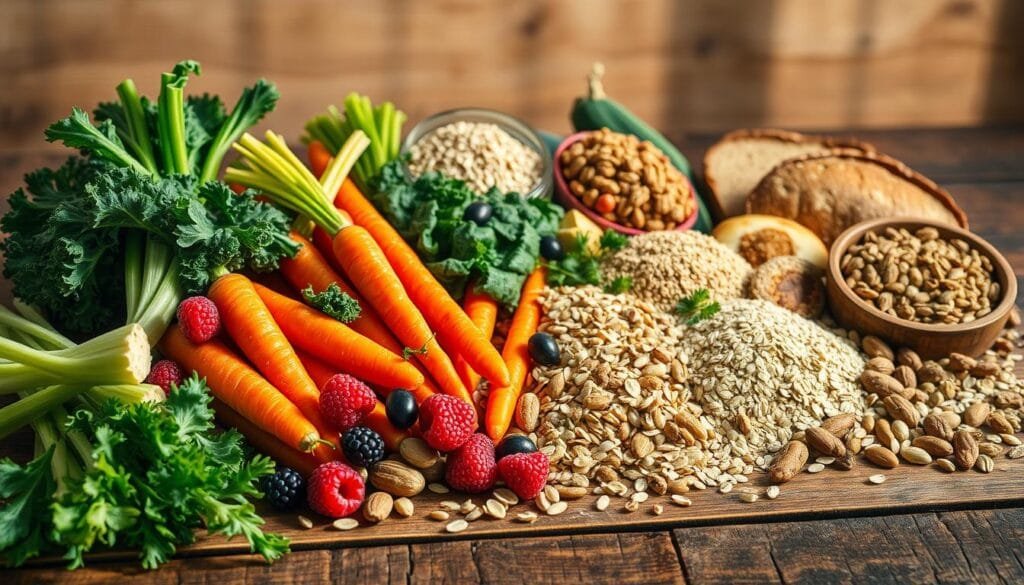
Top sources to include in meals
Mix fruits, vegetables, whole grains and legumes at each meal to get varied content and benefits. Swap white rice for brown, choose rolled oats for breakfast, and snack on whole fruit with the peel when possible.
“Variety matters: different types of plant matter deliver distinct metabolic and gut benefits.”
For a locally relevant list of high-content foods in Malaysia, chat with Wellness Concept on WhatsApp at +60123822655 during business hours.
How much fiber per day: evidence-based targets by age and sex
Setting specific gram targets removes guesswork and helps shoppers compare labels and portion sizes. A practical range for most adults is 25–30 grams from food, with the FDA reference value set at 28 grams per day for a 2,000-calorie diet.
Standard targets and age differences
USDA guidance offers age- and sex-specific numbers. Women under 50 aim for about 25–28 grams. Men under 50 often need 31–34 grams.
After 50, targets fall to roughly 22 grams for women and 28 grams for men. Many adults only reach about 15–17 grams, so most need simple swaps to meet the goal.
Soluble amount to include
Within total intake, aim for roughly 6–8 grams of soluble plant matter each day to help cholesterol and post-meal glucose control.
Why food-first matters in Malaysia
A food-first approach delivers benefits beyond nutrient totals. Whole plant foods lower long-term disease risk, support healthy weight, and feed the gut microbiome.
For a personalised target and local meal ideas, message +60123822655 (Wellness Concept) during business hours.
| Group | Target (grams per day) | Practical tip |
|---|---|---|
| Women <50 | 25–28 | Swap white rice for brown once daily |
| Men <50 | 31–34 | Add a legume side at lunch |
| Women 51+ | 22 | Choose whole fruit with skin |
| Men 51+ | 28 | Include oats or barley at breakfast |
“Aim for steady, food-based changes. Small swaps add up within a week.”
How to reach your fiber intake safely: a step‑by‑step plan
Small, steady changes make it easy to reach targets while avoiding discomfort. Start low and go slow to prevent gas, bloating, constipation or loose stools. Spread new grams across all meals so the bowel can adapt.

Start low, go slow
Increase by a few grams every few days. Let the body adjust so stool form stays comfortable. If stools soften too much, reduce added grams and slow the pace.
Hydration, timing, and spreading through meals
- Drink plenty of water with meals and snacks to help bulk move through the bowel.
- Distribute targets across breakfast, lunch, dinner and snacks rather than one large serving.
- Easy swaps: rolled oats for breakfast, a half-cup of lentils at lunch, whole fruits instead of juice.
- Use the label “fiber per serving” to tally progress and mix whole grains, legumes and vegetables to meet grams.
- Keep the rest of the diet balanced with protein and healthy fats to support satiety and weight goals.
“Consistency and a gentle ramp-up protect comfort and help long-term change.”
For a tailored ramp-up schedule in Malaysia, contact Wellness Concept on WhatsApp at +60123822655 during business hours.
Fiber supplement daily dose: choosing and using the right supplement
When aiming for specific results, the physiologic behavior of the product is the key factor.
High‑viscosity, gel‑forming types like psyllium, oat beta‑glucan and guar gum slow absorption and help lower LDL cholesterol. They also blunt post‑meal blood glucose when taken with food.
Psyllium for regularity and LDL cholesterol support
Psyllium increases stool water content and improves regularity. It has consistent evidence for modest LDL reductions when used with meals.
Beta‑glucan and guar: viscous, gel‑forming types for heart and glycemic care
Beta‑glucan from oats and guar form gels that temper post‑meal glucose and support cardiometabolic markers. Benefits rise with effective grams and meal timing.
What most nonviscous or highly fermentable fibers won’t do
Nonviscous options (for example inulin, wheat dextrin) and methylcellulose do not reliably lower LDL or improve glycemic control. Highly fermentable products often fail to ease constipation.
- Choose by type: match viscous gel‑formers to heart or blood sugar goals.
- Start small: increase grams slowly and take with meals for best effect.
- Need help? For product selection and per day guidance, message Wellness Concept on WhatsApp at +60123822655.
| Product type | Key effect | Best use | Notes |
|---|---|---|---|
| Psyllium | Improves regularity, lowers LDL | Constipation relief, heart care | Take with meals; evidence supports LDL benefit |
| Beta‑glucan / Guar | Reduces post‑meal glucose, lowers LDL | Glycemic control, cardiometabolic care | Works best at effective grams with meals |
| Nonviscous / Fermentable | Feeds microbiome but limited on LDL | Prebiotic support, not for cholesterol | Less useful for constipation or blood sugar |
| Methylcellulose | Bulking; minimal LDL change | Bulking agent | Viscous but not gel‑forming; limited cardiometabolic effects |
Safety first: signs of too much fiber and who should be cautious
Safety begins with spotting early signs that the gut needs a slower pace. If symptoms appear after increasing plant matter, stop the change and reassess.
Gas, bloating, constipation or diarrhea: when to adjust
Common signs include gas, bloating, cramping, constipation or diarrhea. These signal the body needs a slower ramp.
If symptoms occur, reduce added grams, drink more water, and spread intake across meals per day. A short pause often restores comfort.
IBS, existing conditions, and when to consult a healthcare provider
Adults with IBS or other GI disease may tolerate some types better than others. Test small amounts and note which foods cause trouble.
People with diabetes or chronic disease should coordinate changes with their care team to avoid unintended effects on medication or glucose control.
“If symptoms persist or you have IBS or other conditions, contact Wellness Concept on WhatsApp at +60123822655 for personalised guidance.”
| Who | Common concern | Practical step |
|---|---|---|
| Adults with IBS | Gas, bloating | Try gentler types and smaller grams |
| Those with narrowed bowel | Risk of obstruction | Avoid large increases; prioritise fluids |
| People with diabetes | Medication interactions | Coordinate with clinician before big changes |
Personalized guidance in Malaysia: contact Wellness Concept
Wellness Concept provides friendly, local coaching to help Malaysians convert targets into everyday habits. They focus on realistic changes that fit market foods and family routines.
Get tailored advice via WhatsApp at +60123822655
Message the team to ask quick questions about intake, choosing between supplements, or refining a food-first plan. They explain labels and portion sizes in plain language.
Business hours and what to expect
- Mon–Fri: 9:30 am–6:30 pm; Sat: 10:00 am–5:00 pm; Sun: Closed.
- Practical coaching on meal planning, family-friendly diets, and market shopping tips.
- Guidance includes water and portion advice so changes stay comfortable.
- Support covers both dietary swaps and when a supplement or fiber supplements might help.
- Whether starting or fine‑tuning, personalised follow-up helps sustain progress.
“A quick WhatsApp chat can turn targets into simple, local actions that keep progress on track.”
Conclusion
, Small, steady changes to meals make the biggest difference for long-term health. A food-first plan that raises fiber intake gradually — aiming near 25–30 grams per day — gives the clearest benefits for digestion, weight and cardiometabolic risk.
Build plates with whole grains, legumes, fruits and vegetables. Add a few grams at each meal, sip water, and track fiber per serving so progress is measurable without discomfort.
When a product is needed, choose viscous, gel-forming types if the goal is LDL or post-meal blood control. For tailored targets or help reading labels, message Wellness Concept on WhatsApp at +60123822655 during business hours.
FAQ
What is the recommended amount of dietary fiber for adults?
Health authorities generally recommend about 25–30 grams of dietary fiber per day for most adults, with a 28-gram Daily Value often cited on nutrition labels. Individual needs vary by age, sex, and activity level, so they should be adjusted for men and women and for those over 50. A food-first approach using fruits, vegetables, whole grains, and legumes is preferable to reach these targets.
Why is fiber important for overall health?
It supports bowel regularity and stool bulk, helps maintain healthy blood sugar and cholesterol levels, and contributes to a healthy weight and gut microbiome. Regular intake from whole foods also provides vitamins, minerals, and plant compounds that work together to lower long-term disease risk.
What’s the difference between soluble and insoluble types?
Soluble types dissolve in water and form gels that can blunt blood-glucose spikes and lower LDL cholesterol, while insoluble types add bulk and speed transit through the gut to reduce constipation. Both types are important and are found across fruits, vegetables, whole grains, oats, barley, and legumes.
Can a person safely increase their intake without discomfort?
Yes. The safe approach is to increase intake slowly over days to weeks, add a variety of sources, and drink more fluids. Rapid increases can cause gas, bloating, or changes in bowel habits, so starting low and going slow reduces symptoms.
When are powdered or capsule products useful?
Concentrated products like psyllium, beta‑glucan supplements, and certain gums help when diet alone falls short, such as for improving regularity or lowering LDL cholesterol. They’re most effective when chosen for their specific action (viscous, gel-forming fibers) and taken with adequate water.
How much of the soluble type should someone aim for each day?
About 6–8 grams of soluble fiber within the total daily target supports cholesterol and glycemic benefits. People can reach this with oats, barley, beans, apples, and psyllium-containing products if needed.
Are there risks to consuming too much at once?
Excessive amounts introduced rapidly can cause gas, bloating, constipation, or diarrhea. Very high intakes without enough fluids may increase risk of intestinal blockage in rare cases. People with medical conditions or swallowing difficulties should consult a clinician before starting concentrated products.
Who should be cautious or seek medical advice first?
Individuals with IBS, inflammatory bowel disease, recent abdominal surgery, or those taking certain medications should speak with a healthcare provider. Pregnant women, older adults with low fluid intake, and people with narrow gastrointestinal tracts also need tailored guidance.
How should viscous products like psyllium be taken for best effect?
Take them with the recommended amount of water, spread doses across the day with meals, and follow manufacturer instructions. Psyllium is proven to aid regularity and lower LDL cholesterol when used consistently and with sufficient fluid.
Where can someone in Malaysia get personalized advice?
Residents can contact Wellness Concept for tailored guidance. They offer advice via WhatsApp at +60123822655 during business hours: Monday–Friday 9:30 am–6:30 pm and Saturday 10 am–5 pm (closed Sunday).
Which everyday foods provide the best sources?
Oats, barley, beans, lentils, apples, pears, berries, broccoli, carrots, whole-grain breads and cereals, and brown rice are reliable choices. Combining several sources across meals helps reach targets without relying solely on fortified products.
How do fiber choices affect blood sugar and weight management?
Gel-forming, viscous fibers slow digestion and glucose absorption, helping control post-meal blood sugar. They also increase fullness, which can support weight management when included as part of a balanced diet and lifestyle.
Do nonviscous or highly fermentable types offer the same benefits?
Nonviscous or rapidly fermentable varieties feed gut bacteria and can support microbiome diversity, but they usually don’t lower LDL cholesterol or blunt glucose spikes as effectively as viscous fibers. Choice depends on the specific health goal.