
Currently Empty: RM0.00
0 Comments
Which simple upgrade to a daily drink actually makes sense for real-life hydration? That question has many shoppers pausing before they buy.
Wellness Concept presents a clear look at two trendy options. One is marketed as having changed molecular organization. The other adds dissolved gas to standard liquid. Both are sold as hydration products, not medical treatments.
This short article aims to cut through the marketing. It explains the main differences in composition, the strength of the evidence, ease of use, taste, and typical cost. Readers in Malaysia will get practical guidance for everyday use.
The goal is simple: give a fair, non-hype comparison so people can choose what fits their routine. They will learn what claims are backed by emerging research and which remain debated.
Key Takeaways
- Wellness Concept helps shoppers compare two popular hydration types without hype.
- One product focuses on molecular arrangement; the other adds dissolved gas.
- Both are hydration options, not cures; evidence varies by claim.
- Consider composition, usability, taste, and cost when choosing.
- Practical guidance suits everyday routines in Malaysia.
Why “Specialty Waters” Are Trending in Malaysia Right Now
Many Malaysians now reach for niche bottled options as part of a simple wellness routine. Busy commutes, active gyms, and a desire for easy health habits make these products an appealing choice for the workday.
What people hope to improve
Shoppers expect better hydration, sustained energy levels, help with inflammation after exercise, and general health support. These hopes reflect a wish for small, daily gains rather than medical fixes.
How they compare to regular water
Experts note many perceived health benefits overlap with simply drinking enough clean, regular water. Total fluid intake, sleep, and diet remain the core drivers of how someone feels through the day.
Specialty options may change taste, routine, or device use. That can feel valuable even when clinical proof is limited. A practical view: treat claimed benefits as supportive extras, not guaranteed outcomes.
“Simple habits—consistent fluids, rest, and nutrition—still matter most.”
What Is Structured Water?
Structured water is presented by some brands as an “organized” form of liquid, often called hexagonal water or labeled with H3O2-style language. Proponents say tiny clusters of water molecules line up differently, and that change helps cells absorb fluids more efficiently.
Supporters describe clusters that fit cell pores more readily and claim improved cellular function, digestion, sleep, and steadier energy. These reported effects are common on social feeds and product pages.
An easy way to recognize offerings is to look at the advertised methods. Typical approaches include vortexing devices, magnets, contact with minerals or crystals, electrical fields, and short UV exposure. Products range from pitchers to jars and in-store machines.
Scientists note a key challenge: water molecules re-form hydrogen bonds very quickly, so lasting change in molecular structure is hard to prove. That is why mainstream research treats many health claims with caution.
Bottom line: the idea connects to familiar promises—better cell hydration and “living” liquid—but many benefits may overlap with simply keeping consistent fluid intake. Consumers should separate marketing language from what has solid verification.
What Is Hydrogen Water?
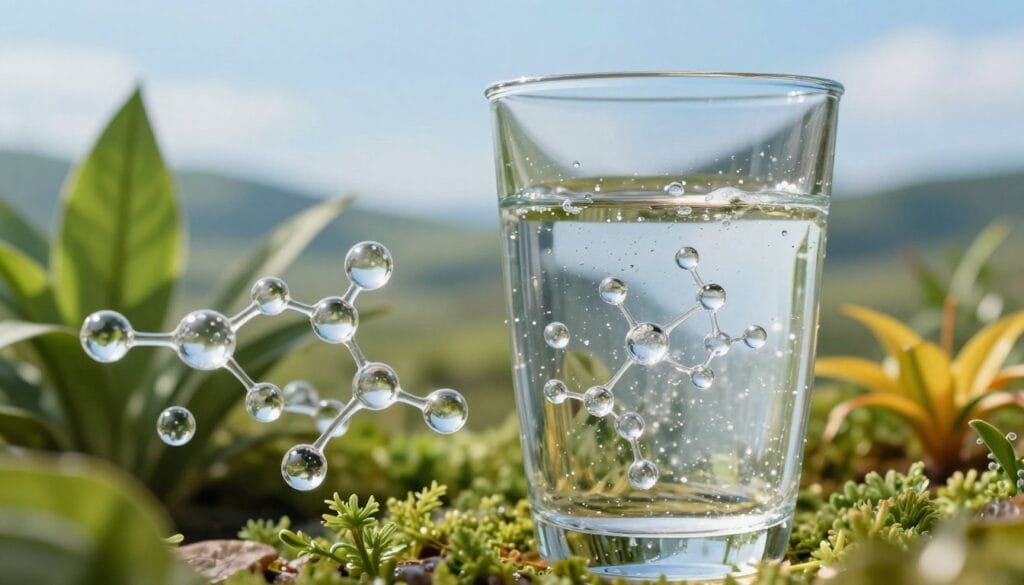
One simple tweak — extra dissolved molecular gas — is what defines modern hydrogen water. It remains H2O, but makers add small amounts of molecular hydrogen to the drink. The idea is that this extra gas may act in the body after drinking.
How it’s made
Common methods include electrolysis, bubbling pure gas into a container, portable generators, and magnesium sticks or tablets that release gas when they dissolve. Each approach delivers dissolved molecular hydrogen by a different process.
What research and studies say
Early research and small studies discuss potential antioxidant effects, support for oxidative stress, reduced inflammation, and better exercise recovery. These findings are promising but still emerging.
Practical reality and use
Because the added gas is volatile, levels fall after opening a sealed bottle. For best results, people should drink soon after generation and follow device instructions. Use sealed containers and avoid long storage.
“Freshness and containment matter — dissolved gas leaves the liquid quickly.”
For a broader product comparison, read the hydrogen and collagen comparison to help match choices to everyday goals.
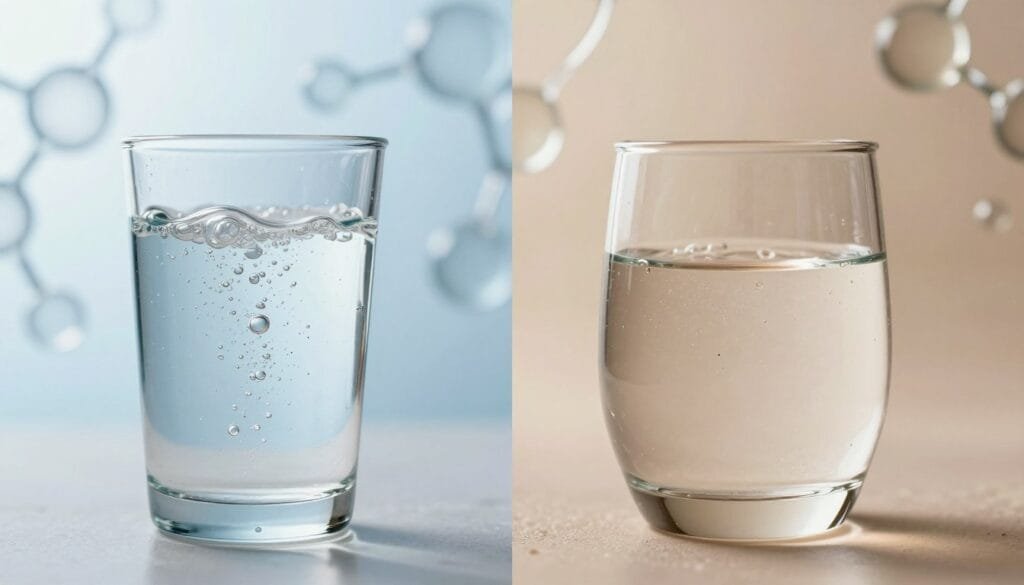
Hydrogen water vs structured water: Key Differences That Matter
A short comparison highlights what actually changes in composition, use, taste, and cost. This helps shoppers in Malaysia make a practical choice rather than follow hype.
Composition and properties
Structured water products claim a changed molecular structure or special organization to alter texture and flow. Makers emphasise an ordered feel and surface interaction.
Hydrogen water focuses on measurable dissolved hydrogen gas levels. That concentration can be tested and reported by makers.
Strength of evidence
Emerging research and small studies give more support to drinks with added dissolved gas for antioxidant effects and exercise recovery. By contrast, claims about lasting molecular reconfiguration remain debated among chemists.
Daily usability
Devices and sealed bottles matter. Gas levels fall fast after opening, so people should drink soon after generation. Many structured systems are home-based and do not emphasise loss after opening.
Taste and mouthfeel
Some report a smoother mouthfeel from structured options and a crisper, lighter sensation from bottled gas products. Variations come from minerals, temperature, and personal expectation.
Cost considerations
Costs range widely: home structured systems can run high while portable options sit lower. Hydrogen makers and bottled products offer mid-range and pay-per-bottle choices. Some devices need parts replaced every 6–12 months.
| Feature | Composition & Properties | Evidence & Studies | Typical Cost & Maintenance |
|---|---|---|---|
| Structured option | Claims altered molecular structure; emphasis on texture | Debated; limited reproducible studies | Home systems US$500–3,000; portable US$50–200; low parts maintenance |
| Gas-enriched option | Measurable dissolved hydrogen gas; reported concentration levels | Emerging research and small studies supporting antioxidant effects | Devices US$50–500; bottled US$2–5; parts may need replacement every 6–12 months |
| Usability | No rapid loss after opening emphasized | Research varies by claim type | Home-based systems vs portable bottles for commuters |
| Taste | Often described as smoother | User reports vary; controlled studies limited | Price and design affect perceived value |
“Regular water remains the baseline for hydration; specialty options are an optional upgrade.”
How to Choose the Best Option for Their Goals and Lifestyle
Choosing the right daily drink starts with matching claims to real goals and routines. If antioxidant support and faster post-workout recovery matter, drinks with added dissolved gas may suit those needs. For people who care most about taste and a softer mouthfeel, options marketed for cellular hydration might appeal.
Goal-based guide
Antioxidant and recovery: pick products that report measured dissolved gas levels and quick consumption after opening.
Energy through the day: routine matters more than a single bottle — sip regularly during commutes, at the office, and at the gym.
Cellular hydration and texture: try samples to judge mouthfeel and taste before buying full devices or bottles.
What to look for
- Home vs travel devices — check upkeep and portability.
- Electrolysis features only if they suit daily use and budget.
- Transparent specs on concentration and storage levels.
Safety and smart decisions
Avoid cure-all promises. Treat all potential health benefits as emerging and talk to a clinician if someone has medical conditions or takes medication.
“Prioritise clear specs, realistic expectations, and sensible budgeting.”
Where Wellness Concept fits in: visit in person to compare products side-by-side and ask practical questions. Store hours: Monday–Friday 9:30 am–6:30 pm, Saturday 10 am–5 pm, Sunday closed.
Conclusion
, This final note pulls the key practical lessons together so readers in Malaysia can match choices to daily goals.
The article summarises that structured water products focus on claimed organization of molecules and a softer mouthfeel, while hydrogen water adds dissolved gas and needs prompt drinking from a sealed bottle to retain most effects.
Current studies and research give more emerging support for antioxidant-style benefits from drinks with added gas, but evidence for lasting molecular reconfiguration remains limited and debated.
For health and hydration, regular water intake comes first. Treat specialty options as supportive extras, check claims carefully, and choose what fits routine, budget, and personal response.
FAQ
What are the main differences between hydrogen water and structured water?
They differ in what’s claimed to make them special. One adds dissolved molecular gas that acts as an antioxidant, while the other claims an altered molecular arrangement—often described as “hexagonal” or organized—using methods like vortexing, magnets, or minerals. Research support is stronger for the dissolved gas approach, and evidence for structural rearrangement is limited.
Are either of these options better than regular drinking water for daily hydration?
For basic hydration, plain filtered tap or bottled options work well. Some people report feeling more energized or refreshed with specialty bottles, but those effects are often subjective. If someone wants antioxidant support or recovery benefits, devices that add dissolved gas have clearer study backing than structural treatments.
How does the dissolved gas form get added, and does it stay in the bottle?
Common methods include electrolysis devices, bubbling gas into liquid, and magnesium tablets that react to release gas. The gas escapes over time, so using the product soon after preparation and storing it sealed and cool preserves levels best.
What are the claimed benefits of structural treatments like vortexing or mineral infusion?
Proponents say these methods improve hydration, nutrient uptake, digestion, detoxification, sleep, and cellular function. Independent experts question how long any organized state would persist and note a lack of strong clinical evidence supporting those broad health claims.
Are there any proven health advantages to adding dissolved molecular gas to a bottle?
Emerging studies suggest antioxidant effects, reduced markers of oxidative stress, and potential help with exercise recovery and inflammation. While promising, most trials are small or preliminary, so people should view results as supportive rather than definitive.
Do specialty bottles change taste or mouthfeel?
Yes. Some users describe a smoother, rounder sensation with structured treatments and a crisper, slightly effervescent quality with dissolved gas. Personal perception varies with source water, device, and storage.
How should someone choose between home systems, portable bottles, and bottled products?
Consider goals, budget, and convenience. Home systems and generators offer ongoing production but need maintenance. Portable bottles suit travel and quick use. Prebottled products offer convenience but may lose active properties faster after opening.
Are there safety concerns or interactions with medical conditions?
Most people tolerate these products well. Those with serious health conditions, pregnant individuals, or anyone on medication should discuss changes with a healthcare professional before regular use. Avoid products that make cure-all promises.
How long does any claimed structural change or added gas last after opening?
Added dissolved gas dissipates quickly—often within hours—so sealed, cool storage helps. Claims about long-lasting structural changes are debated; many scientists argue any altered arrangement would revert rapidly under normal conditions.
What should shoppers look for at Wellness Concept when comparing products?
Look for clear device specifications (electrolysis quality, materials), testing or third-party claims for gas levels, realistic marketing, and easy maintenance. Staff can demonstrate bottles and devices during store hours: Monday–Friday 9:30 am–6:30 pm and Saturday 10 am–5 pm.
Can these products help with energy levels and exercise recovery?
Some evidence and user reports suggest benefits for recovery and perceived energy, particularly for products that deliver dissolved antioxidant gas. Results vary by individual, fitness level, and consistency of use.
Are claims like “hexagonal H3O2” backed by mainstream science?
The specific notion of stable H3O2 clusters and long-lasting hexagonal networks is not accepted by mainstream chemistry and molecular physics. Skepticism arises because water molecules rearrange rapidly and thermal motion disrupts long-range organization.
How can someone verify product claims before buying?
Ask for third-party lab results, independent studies, and demonstration of device output. Read peer-reviewed research on dissolved molecular gas effects and be wary of marketing that promises cures or unrealistic benefits.